The Russian tradition
Hand-painted Russian icons: the tradition of the icon in Rus'
For a Russian, the icon is not a religious picture: it is a presence in the home. It welcomes newly-weds, watches over the cradle, accompanies journeys and mourning. Concetta Basile paints the great subjects of the Russian tradition by hand, in Sicily, with the same technique as the ancient workshops: a panel with recess and linen, gesso, gold leaf, egg tempera and olifa.
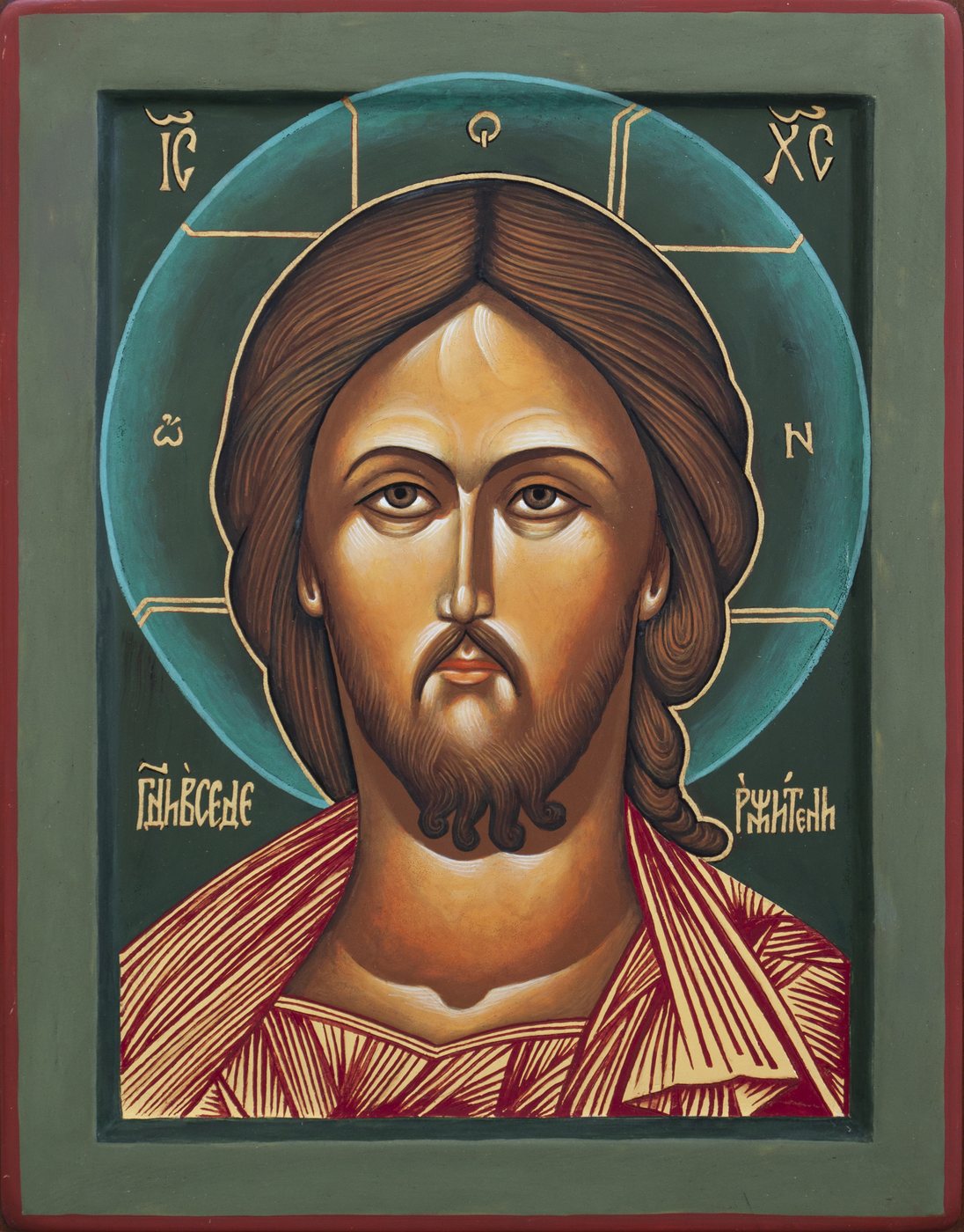
The icon in the life of a Russian family
In the Russian tradition every home has its «beautiful corner», the icon corner, usually facing east, with a lamp burning before the images. There the family prays morning and evening, there those who leave are blessed and those who return are welcomed. Home icons pass from generation to generation and often carry the family's memory on the back.
The most solemn moment is the wedding. Before the ceremony the parents bless the bride and groom with a pair of icons, the Saviour for the groom and the Mother of God, very often Our Lady of Kazan, for the bride: these are the wedding icons, which the new family will take into its home. For a baptism, the icon of the saint whose name the child receives is given.
The best-loved Russian icons
- Our Lady of Kazan, found in 1579 and linked to the liberation of Moscow in 1612: the most venerated icon of the Russian people.
- The Theotokos of Vladimir, which came from Constantinople in the twelfth century: the model of every icon of Tenderness.
- Andrei Rublev's Trinity, painted for the monastery founded by Saint Sergius of Radonezh: the three angels, guests of Abraham.
- The Saviour of the Fiery Eye, the stern face of Christ born in fourteenth-century Moscow.
- The Holy Face, the Saviour «not made by human hands», among the first icons a Russian iconographer learns to paint.
- Saint Nicholas, the most loved saint in Russia after the Mother of God, invoked by travellers and children.
- The Protection of the Mother of God (Pokrov), celebrated on 1 October (14 October in the civil calendar): Mary spreading her veil over the faithful.
Riza and oklad: the icon covered in silver
Many Russian icons of past centuries are covered by a riza or oklad, a cover of embossed metal, often gilded silver, leaving only the faces and hands visible. It was a gesture of veneration: the most beloved image was «clothed» as one adorns a loved person. But beneath the riza there was always a fully painted icon.
Concetta Basile's icons are meant to be seen whole: the gold is not an added cover but is laid as leaf on the panel, in the ground, the halos and the highlights, and every garment is painted by hand in egg tempera. It is the same choice as Rublev's great icons, which have come down to us uncovered.
The technique of Russian workshops, today in Sicily
Those who know Russian icons will find in Concetta Basile's panels the words of the ancient workshop: the kovcheg, the recess with a raised border that sets apart the sacred space; the pavoloka, the linen glued to the panel; the levkas, the gesso laid in many coats and sanded by hand; the olifa, the cooked linseed oil varnish that completes the work. All her panels, in linden multi-ply, have the recess and the linen.
Inscriptions are written in Greek or Latin; the monograms of Christ and the Mother of God, IC XC and MP ΘY, are the same that Russian icons received from Byzantium. Like every icon by Concetta Basile, it is fully gilded with 23¾ karat gold, with inscriptions in Greek or Latin, and is commissioned with an offering proportionate to the time and materials of the work.
Icons of the Russian tradition painted by Concetta Basile
Here are some of the icons of the Russian tradition painted by Concetta Basile. Every subject can be commissioned in the size you wish.
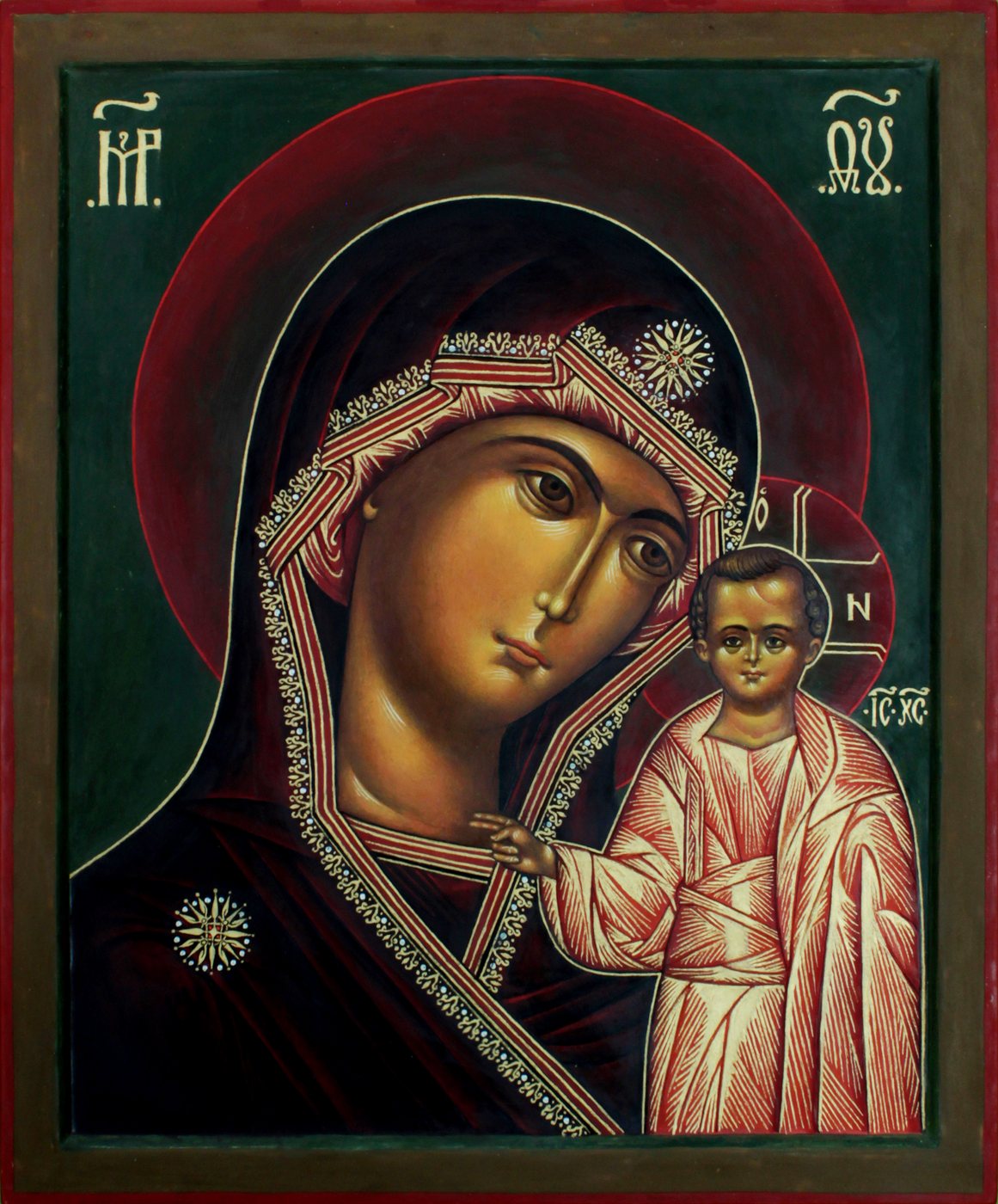
Our Lady of Kazan
Russia's best-loved Hodegetria, green ground and red halo.
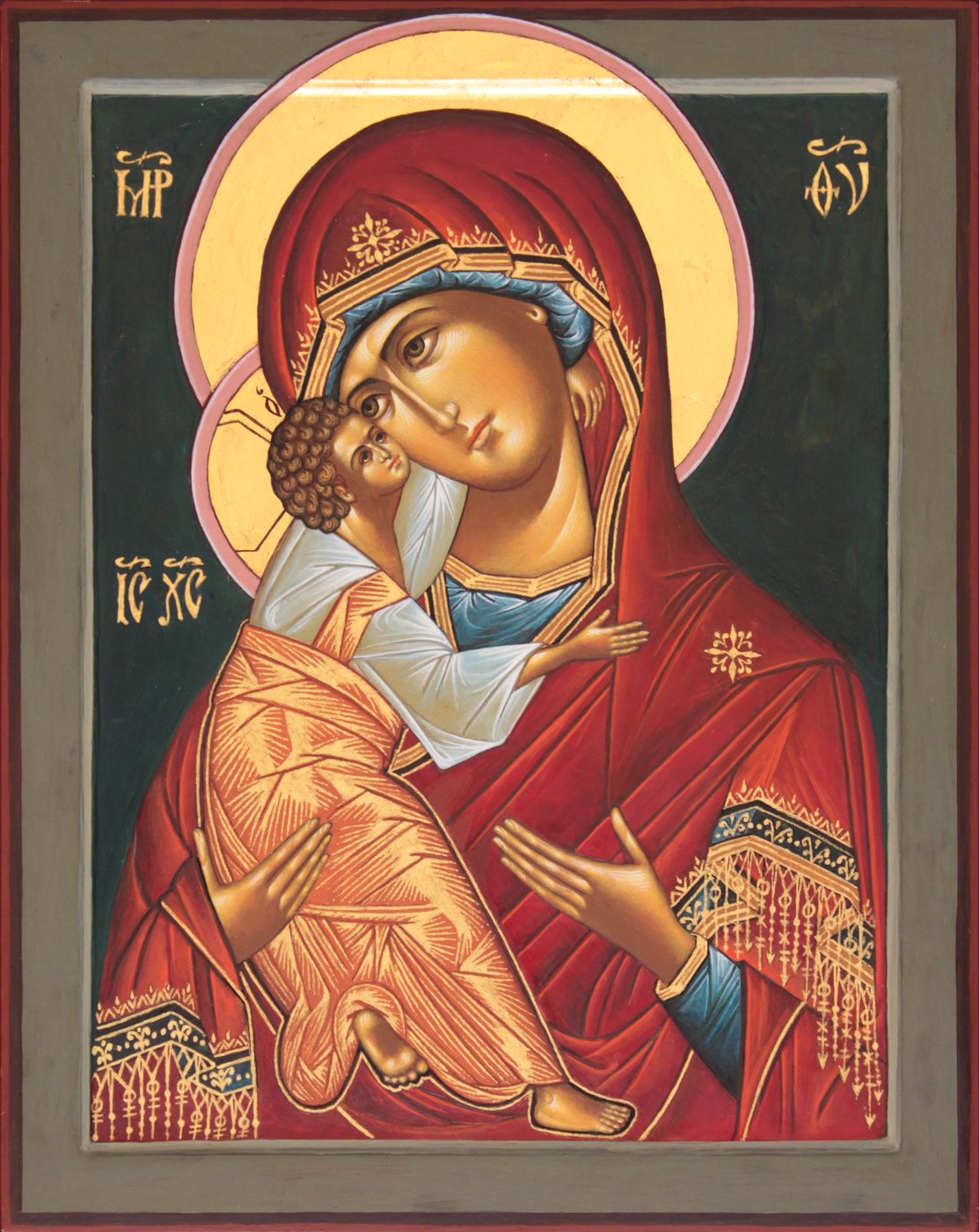
Theotokos of Vladimir
The Tenderness that travelled from Constantinople to Kyiv, Vladimir and Moscow.
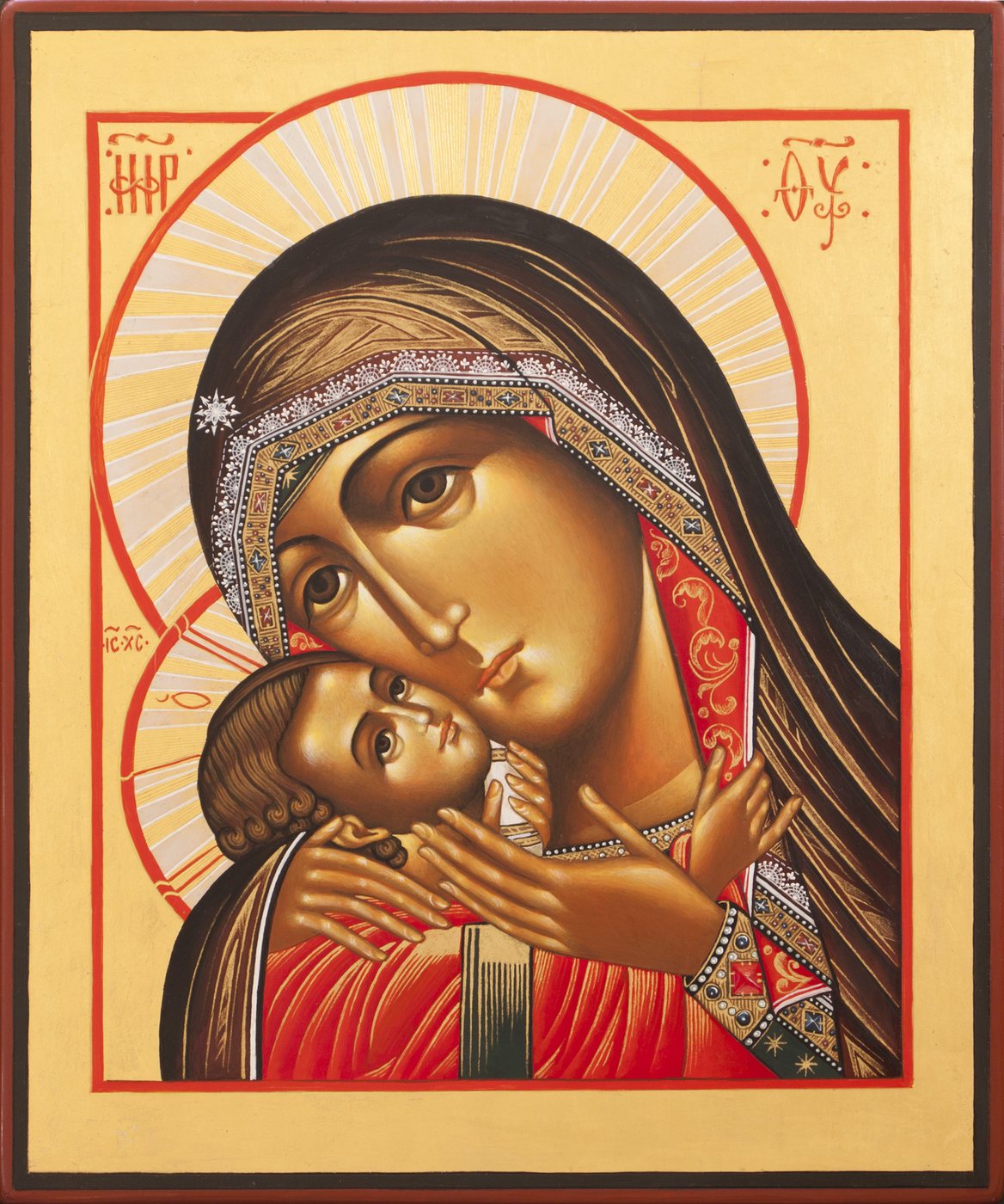
Theotokos of Korsun
An Eleousa venerated in Russia, with the MP ΘY and IC XC monograms.
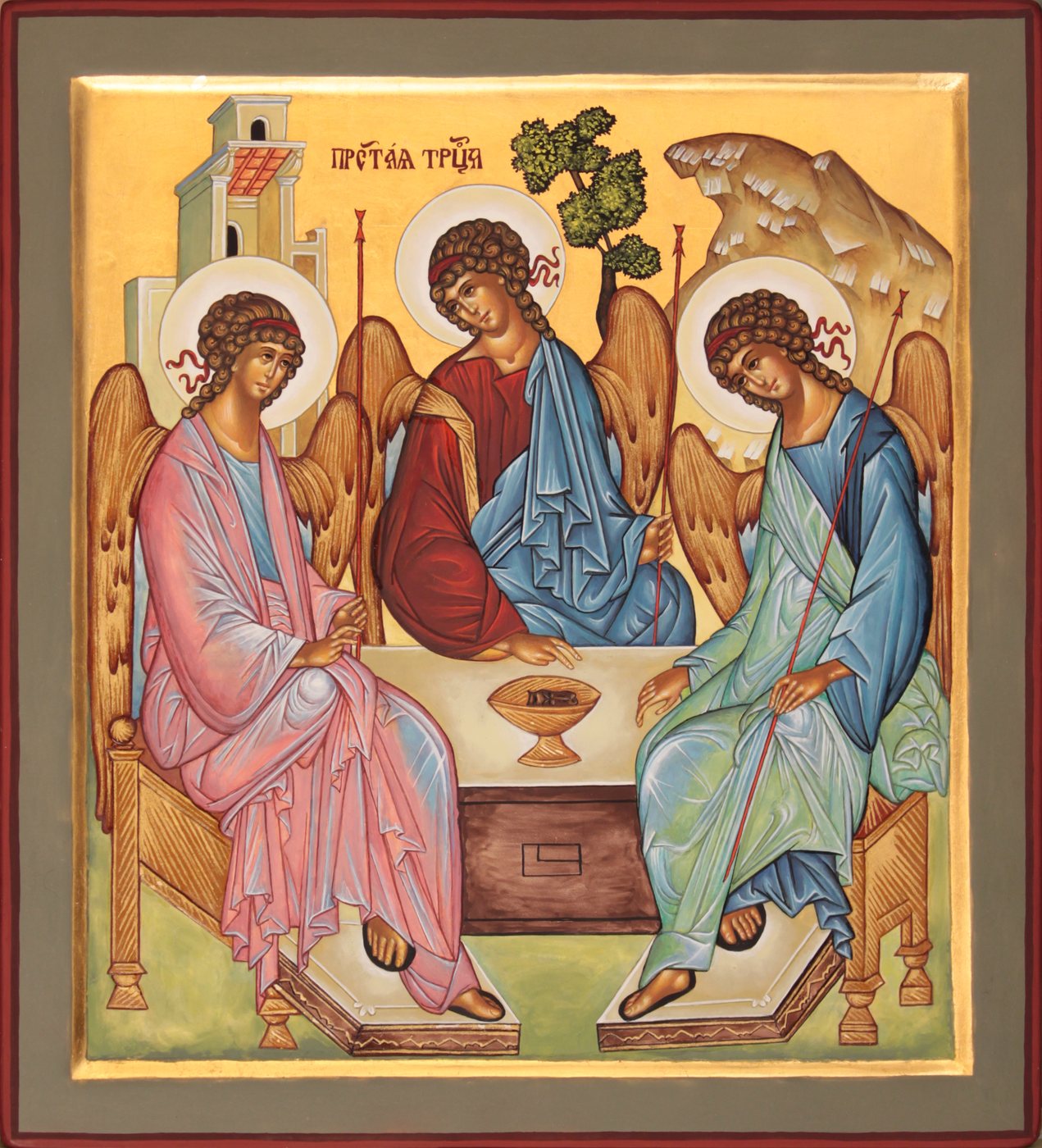
Rublev's Trinity
The three angels at Abraham's table, after Andrei Rublev's masterpiece.
Saviour of the Fiery Eye
The face of Christ of the Muscovite tradition.
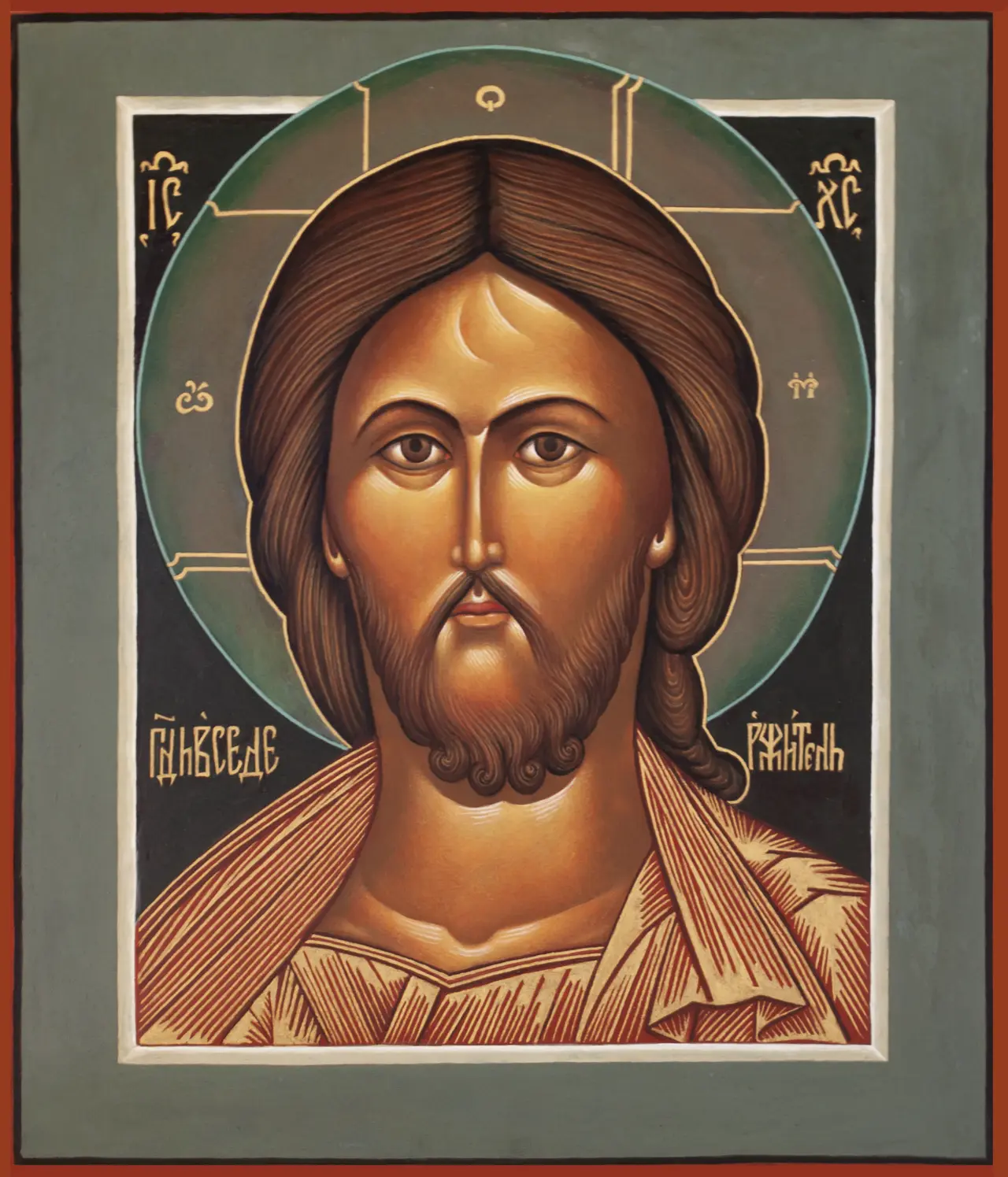
Saviour of the Fiery Eye
A second version, with an intense gaze and the cross-inscribed halo.
Frequently asked questions
Which icon is given to a couple in the Russian tradition?
The pair of wedding icons: the Saviour for the groom and the Mother of God, very often Our Lady of Kazan, for the bride. The parents bless the couple with them before the ceremony, and the icons then stay in the new family's home.
What is the beautiful corner?
It is the corner of the home dedicated to icons, krasny ugol in Russian: usually facing east, with a lamp burning. It is the place of family prayer. The guide on where to place icons at home explains how to arrange it.
Is a Russian icon painted in Italy authentic?
Yes, if it is painted according to the canon and the traditional technique. The icon belongs not to a nation but to the Church: Russia received it from Byzantium, and Rublev himself trained beside a master from Constantinople, Theophanes the Greek. What matters is faithfulness to the model, the technique and prayer, not the place where the icon is born.
Can I have a Russian icon with a silver riza?
Concetta Basile paints icons that are entirely painted and gilded by hand, without a metal cover: the 23¾ karat gold leaf is already part of the icon, in the ground, the halos and the highlights.