The Magisterium
The Church and artificial intelligence: images, truth and human work
In less than thirty years the Church has gone from John Paul II's Letter to Artists to an encyclical entirely devoted to artificial intelligence. The thread is the same: the dignity of the person, the value of truth, the work of human hands. Here are the main texts, quoted from the official sources of the Holy See.
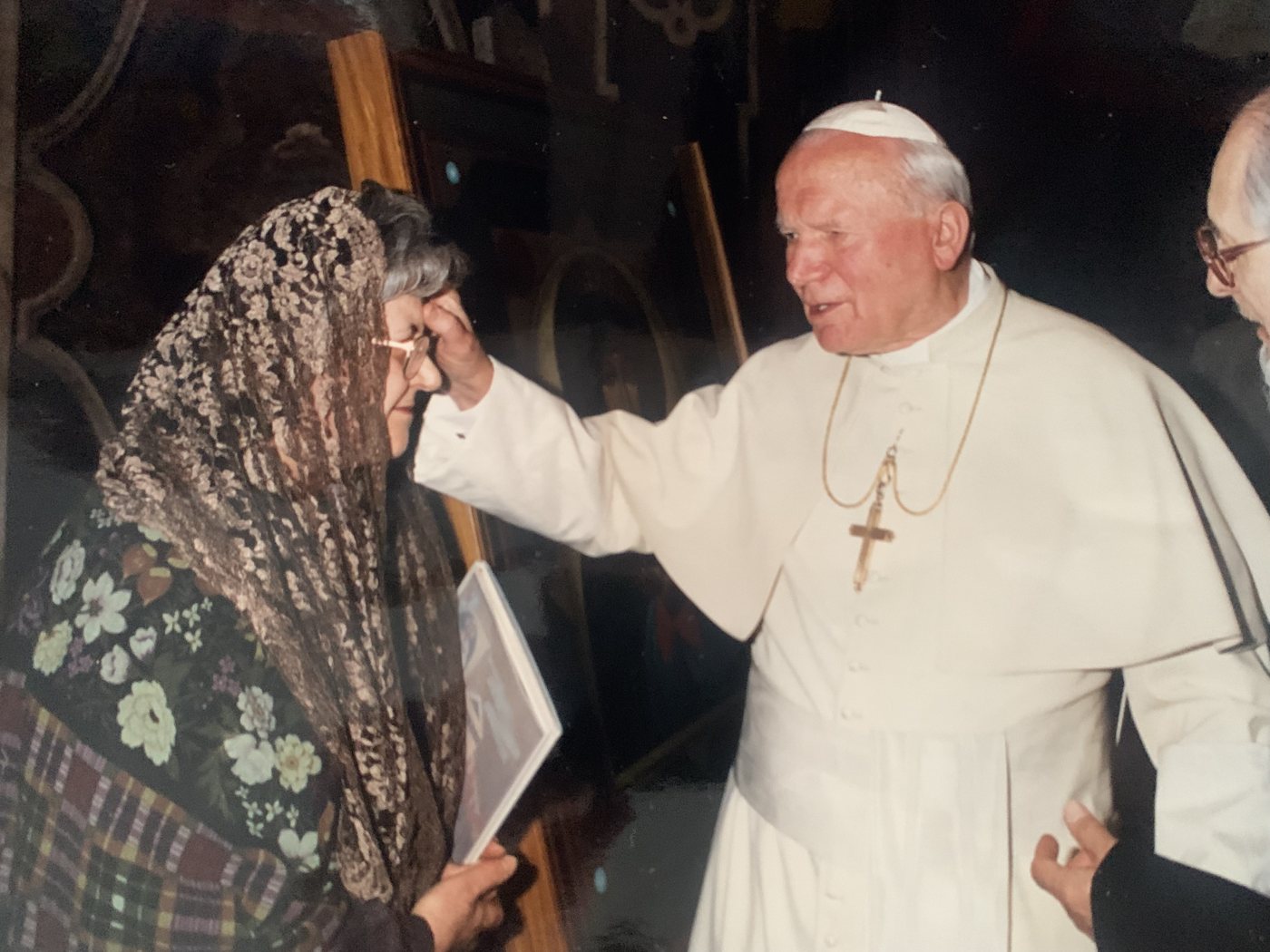
John Paul II: the Letter to Artists (1999)
On 4 April 1999, Easter Sunday, John Paul II wrote to artists: «None can sense more deeply than you artists, ingenious creators of beauty that you are, something of the pathos with which God at the dawn of creation looked upon the work of his hands». In the same letter he recalled the Council of Nicaea in 787, «which decreed the legitimacy of images and their veneration», and explained that the icon is not venerated for its own sake but points to the subject it represents.
He is the same Pope to whom Lia Galdiolo, Concetta Basile's teacher and grandmother, presented her hand-painted icons at audiences.
Francis: «I too have been an object of this»
In his Message for World Communications Day 2024, «Artificial Intelligence and the Wisdom of the Heart», Pope Francis warned that artificial intelligence can be a source of «cognitive pollution», and spoke of «deepfakes», «namely the creation and diffusion of images that appear perfectly plausible but false», adding: «I too have been an object of this».
The response he proposed is not fear, but the «wisdom of the heart»: the ability to read the novelty of our time without losing what is human.
Antiqua et nova (2025): truth, work, idolatry
On 28 January 2025 the Dicastery for the Doctrine of the Faith and the Dicastery for Culture and Education published the note Antiqua et nova on the relationship between artificial intelligence and human intelligence.
On truth: «AI also presents a serious risk of generating manipulated content and false information, which can easily mislead people due to its resemblance to the truth» (no. 86); of deepfakes the note says that «while the images or videos themselves may be artificial, the damage they cause is real» (no. 87).
On work: if AI is used to replace human workers rather than accompany them, there is a «substantial risk of disproportionate benefit for the few at the price of the impoverishment of many» (no. 68).
On faith: «the presumption of substituting God for an artifact of human making is idolatry» (no. 105).
Leo XIV and Magnifica Humanitas (2026)
On 10 May 2025, two days after his election, Leo XIV explained to the cardinals that he chose his name because Leo XIII, with Rerum novarum, addressed the first industrial revolution, and today the Church offers its social teaching to respond to another industrial revolution and to developments in artificial intelligence.
On 15 May 2026 he signed the encyclical Magnifica Humanitas, on safeguarding the human person in the age of artificial intelligence. It says that «disinformation did not begin with AI, yet today it finds a powerful amplifier in AI. The ability to manipulate content, images and videos exposes people to biased or misleading perspectives» (no. 132); that «the protection of employment opportunities and the irreplaceable role of the individual must remain the general rule» (no. 152); and that our first task is «neither to demonize nor idolize technological tools» (no. 137).
The work of the hands, today
A hand-painted icon takes weeks: the panel, the linen, the gesso, the gold, the ground colours, prayer. It is exactly the «irreplaceable role of the individual» Leo XIV speaks of. Choosing a sacred image made by human hands means safeguarding a knowledge handed down from master to pupil, as Lia Galdiolo passed it on to Concetta Basile, and supporting the work of those who carry it forward.
Frequently asked questions
Is the Church against artificial intelligence?
No. Leo XIV asks us «neither to demonize nor idolize technological tools» (Magnifica Humanitas, 137). The Church recognises its possibilities but asks that it remain at the service of the person, of truth and of human work.
What is Antiqua et nova?
It is a note published on 28 January 2025 by the Dicastery for the Doctrine of the Faith and the Dicastery for Culture and Education on the relationship between artificial intelligence and human intelligence. Among other things it addresses disinformation, deepfakes, work and the risk of idolatry.
What is Magnifica Humanitas?
It is Leo XIV's encyclical letter, signed on 15 May 2026, on safeguarding the human person in the age of artificial intelligence: it deals with truth and disinformation, work, education, peace and the responsibility of those who develop AI systems.
Why did Leo XIV choose this name?
He explained it to the cardinals on 10 May 2025: Leo XIII addressed the social question of the first industrial revolution with Rerum novarum; today the Church offers its social teaching to respond to another industrial revolution and to developments in artificial intelligence.
Was Pope Francis a victim of fake images?
Yes, he said so himself in his Message for World Communications Day 2024: speaking of deepfakes, images «that appear perfectly plausible but false», he wrote: «I too have been an object of this».
What does the Church say about work threatened by AI?
That AI should accompany workers, not replace them: Antiqua et nova speaks of the risk of «disproportionate benefit for the few at the price of the impoverishment of many» (no. 68), and Magnifica Humanitas states that «the protection of employment opportunities and the irreplaceable role of the individual must remain the general rule» (no. 152).
Why does the Church speak of idolatry in connection with AI?
Because one can end up seeking in a machine answers and a presence that only God can give. Antiqua et nova recalls that «the presumption of substituting God for an artifact of human making is idolatry» (no. 105), and that AI may seem even more seductive than ancient idols because it gives the illusion of speaking.
What do icons have to do with all this?
The icon is the opposite of a generated image: it has an author, a prototype, a history, and is born from the patient work of a person in prayer. The Council of Nicaea in 787 defended its veneration because it points to the one it depicts; John Paul II, in the Letter to Artists, called it a historic event «not just for the faith but for culture itself».
Where can these documents be read?
All the texts quoted are published on the official website of the Holy See, vatican.va: the Letter to Artists, the Message for World Communications Day 2024, the note Antiqua et nova, Leo XIV's address to the College of Cardinals and the encyclical Magnifica Humanitas.