From panel to olifa
How an icon is painted: the traditional technique
Painting an icon means reliving the seven days of Creation: from the panel smoothed like the first day of Genesis to the light of the last layer, to rest and the olifa. These are the stages of the technique Concetta Basile received from the Russian-Byzantine school.
1. The panel and gesso ground
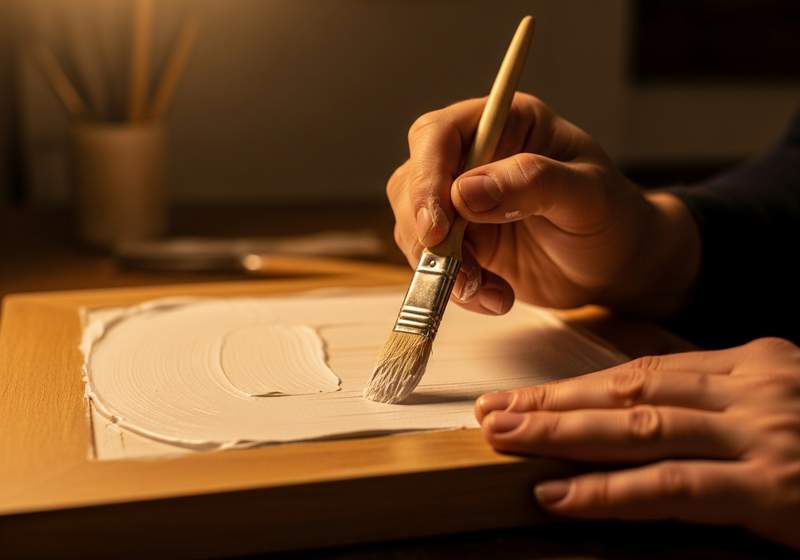
The support is a panel of seasoned wood. The central field is often slightly recessed, leaving a raised border: the «ark» (kovcheg), which separates the sacred space from the world. Traditionally a linen cloth is glued to the panel, then many layers of gesso and animal glue (rabbit-skin glue) are applied one after another: the ground known in the Russian tradition as levkas.
Each layer dries for days before the next, and finally the surface is sanded by hand, also wet, until it is smooth as ivory. Museum-grade finishes exceed seven layers.
2. Drawing, sacred geometry and incision
The drawing is built on a precise geometry (verticals, horizontals, diagonals, circles) that forms the framework of the image, like the skeleton of the body. The main lines are then incised into the gesso with a point: incision makes the drawing irreversible and guides gilding and painting.
3. Gilding with 23¾ karat gold
Gold is applied first, before the colours: it represents uncreated Light, the glory of God that precedes all things. Leaves of 23¾ karat gold are laid by hand on the ground and halos. In an icon gold is not luxury, but eternity, light and wisdom.
4. Egg tempera: from darkness to light
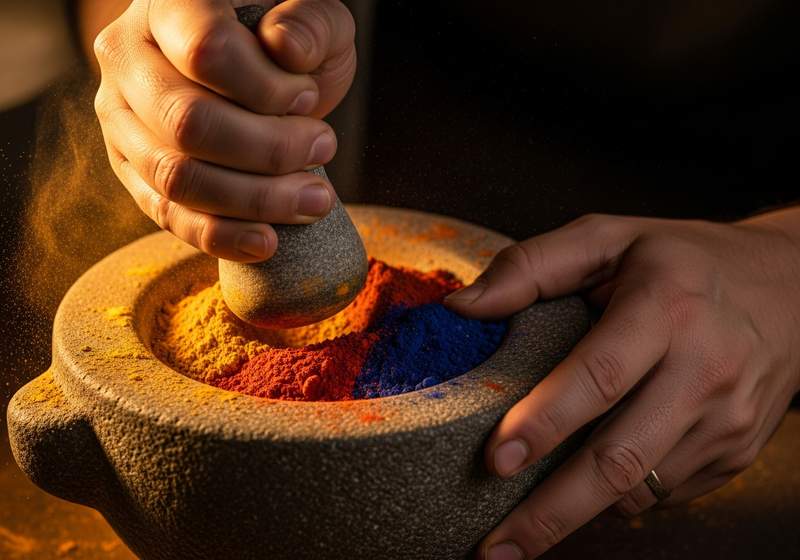
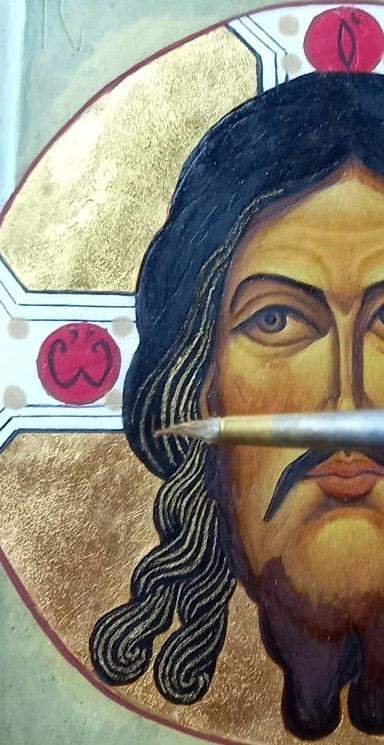
Pigments (ochres, earths, lapis lazuli, cinnabar) are ground by hand in a mortar and bound with egg yolk. Work starts from the darkest tones, like Scripture not yet understood; then, glaze after glaze, ever lighter layers are added: this is the illumination that brings face and garments into the light.
The final highlights, the whites on the face and the gold lines on the garments, show that light does not come from outside, but from within the transfigured person.
5. The inscriptions
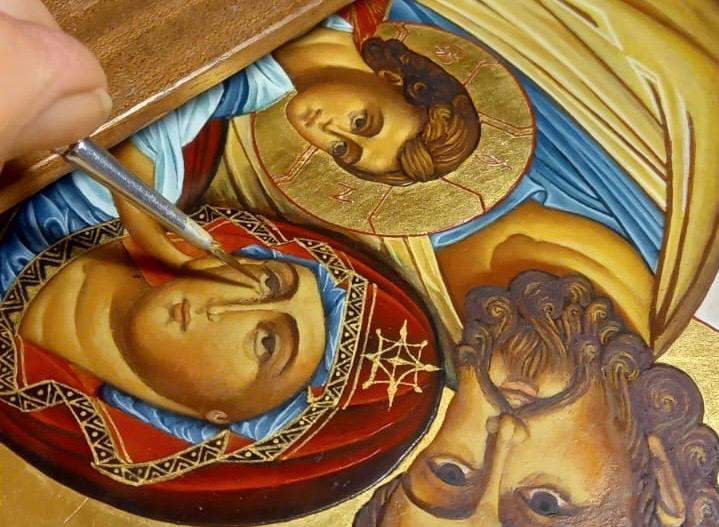
The name of the subject, written on the panel, is an essential part of the icon: it is what identifies it. Traditional abbreviations are used (IC XC for Jesus Christ, MP ΘY for the Mother of God) or full inscriptions and liturgical texts. In Concetta Basile's icons the inscriptions are in Greek or Latin.
6. Rest and the olifa
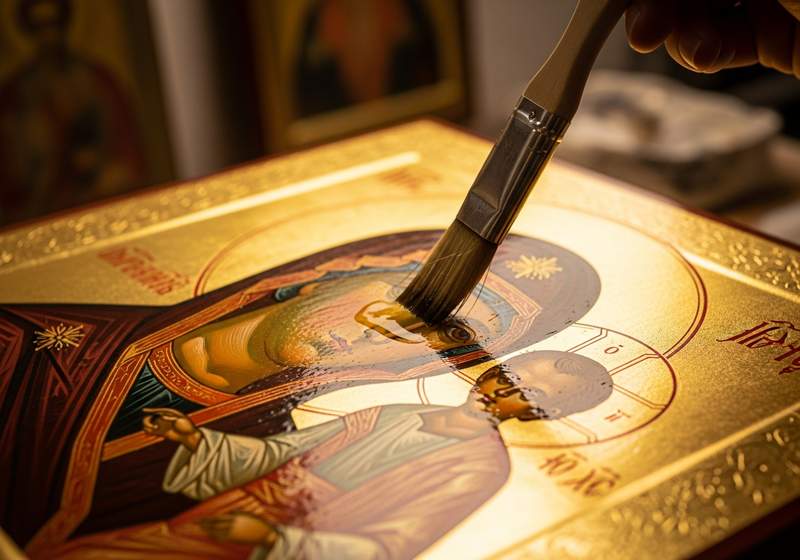
Once painting is finished, the icon rests for weeks or months so that the colours can consolidate: the seventh day. Then the olifa is applied, a varnish of cooked linseed oil made to the old Russian recipe, which penetrates the layers, revives the colours and protects them. It is the final act: the icon becomes radiant and is ready to be blessed.
Frequently asked questions
Why do we say an icon is «written»?
Because the Greek verb graphein means both to write and to paint: an icon is considered the Word of God rendered in images, read like a text.
What is egg tempera?
A very ancient painting technique in which powdered pigments are bound with diluted egg yolk. It dries quickly, allows extremely fine glazes and, protected by olifa, lasts for centuries.
What is the difference between gold leaf and gold paint?
Gold leaf is real metal beaten into extremely thin sheets: it reflects light deeply and does not tarnish. Gold paint or ink contains metallic powders that darken over time.