Greek and Cretan tradition
Hand-painted Greek icons: from the Cretan school to today
In Greece the icon is everywhere: in churches, in homes, in wayside chapels, on fishing boats. Concetta Basile paints icons of the Greek tradition by hand, with inscriptions in Greek, gold leaf and egg tempera, following a history that has bound Greece to Italy for centuries.
Crete and Venice: the school that united East and West
In the fifteenth and sixteenth centuries Crete, then Venetian, became the largest centre of icon production in the Mediterranean. Masters such as Angelos Akotantos and Andreas Ritzos worked for Orthodox and Catholic patrons; Theophanes the Cretan painted frescoes in the monasteries of Meteora and Mount Athos, and Michael Damaskinos also worked in Venice.
In Venice the Greek community built the church of San Giorgio dei Greci, with its iconostasis; beside it, the Hellenic Institute of Byzantine and Post-Byzantine Studies now keeps a museum of icons. It is one of the places where one sees best how much the Greek icon also belongs to Italian history.
From the twentieth century to today: the return to tradition
Between the eighteenth and nineteenth centuries the icon in Greece too had come under the influence of Western painting. In the twentieth century the painter and writer Photis Kontoglou (1895-1965) led the return to Byzantine models: he studied the frescoes of Mount Athos and Mystras, painted churches and trained pupils, and since then Greek iconography has returned to the light, line and colours of the tradition.
It is the same faithfulness that guides Concetta Basile, trained in the traditional school of iconography by her grandmother and teacher Lia Galdiolo: the ancient model, the ancient technique, prayer.
The Panagia and the best-loved saints of Greece
- The Panagia, the All-Holy: Glykophilousa (Tenderness), Hodegetria, Platytera, and the Virgins of Mount Athos such as the Axion Estin and the Portaitissa.
- The Panagia Evangelistria of Tinos, the icon of the Annunciation found in 1823 after the vision of the nun Saint Pelagia: on 15 August it draws the largest pilgrimage in Greece.
- Saint Nicholas, protector of sailors, present on many boats and in island homes.
- Saint George and Saint Demetrius, the soldier saints; Saint Spyridon, bishop of Trimythous in Cyprus and father of the Council of Nicaea, whose relics are venerated in Corfu.
- The archangels Michael and Gabriel, the Taxiarchs, to whom many island churches are dedicated.
The name day, the most heartfelt feast
In Greece and Cyprus the name day is often celebrated more than a birthday: on the day of the saint whose name one bears, the house opens to friends and relatives. An icon of the name saint, with the name written in Greek beside the figure, is the most personal gift one can give, and will accompany its recipient for a lifetime.
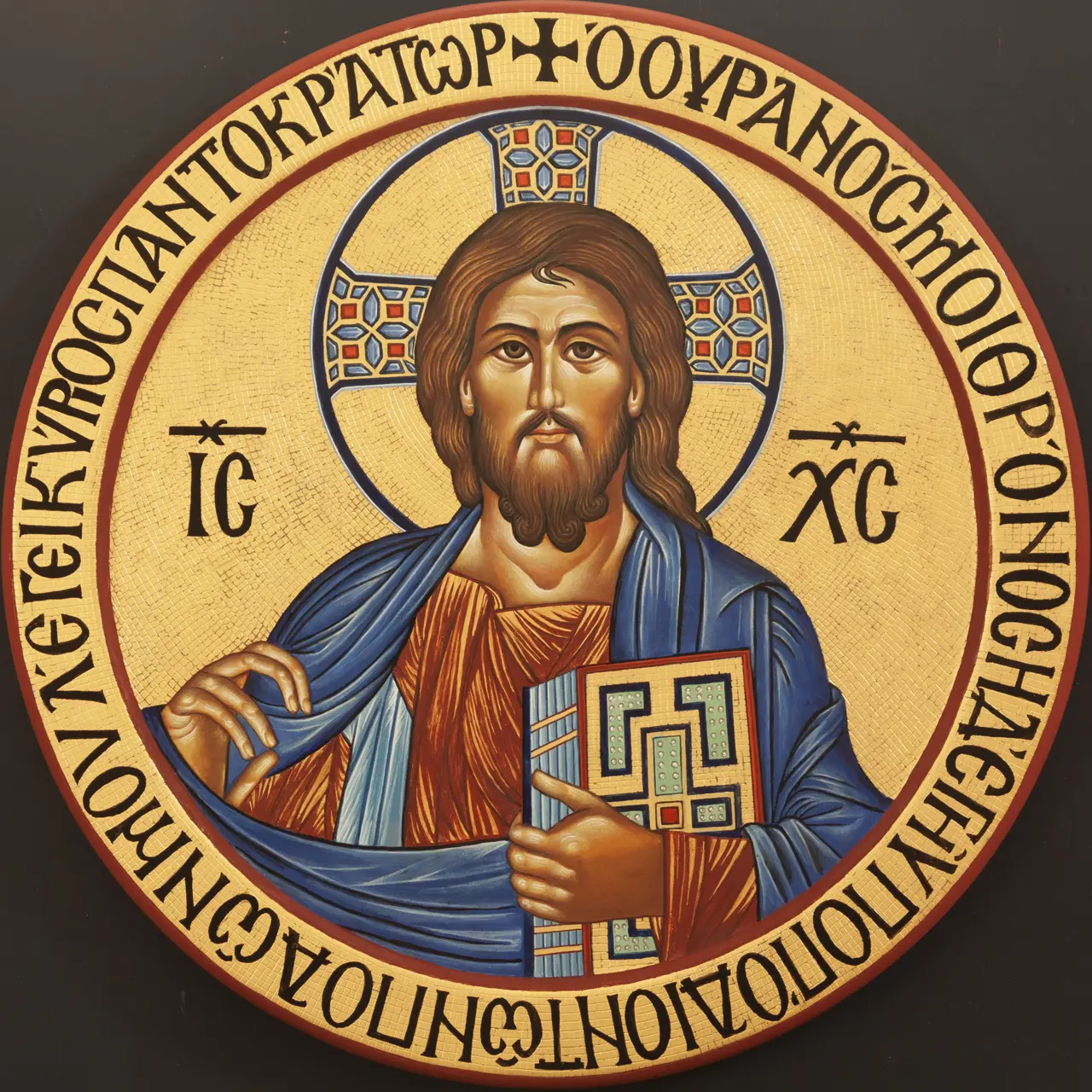
Greek inscriptions are part of the icon: Ο ΑΓΙΟΣ, «the saint», followed by the name; IC XC for Christ, MP ΘY for the Mother of God, Ο ΩΝ in the Lord's cross-inscribed halo. Like every icon by Concetta Basile, it is fully gilded with 23¾ karat gold, with inscriptions in Greek or Latin, and is commissioned with an offering proportionate to the time and materials of the work.
Icons of the Greek tradition painted by Concetta Basile
Some icons with Greek inscriptions painted by Concetta Basile. Every subject, including the name saint, can be commissioned in the size you wish.
Christ Pantocrator
Roundel with Greek inscription IC XC and Ο ΩΝ in the halo.
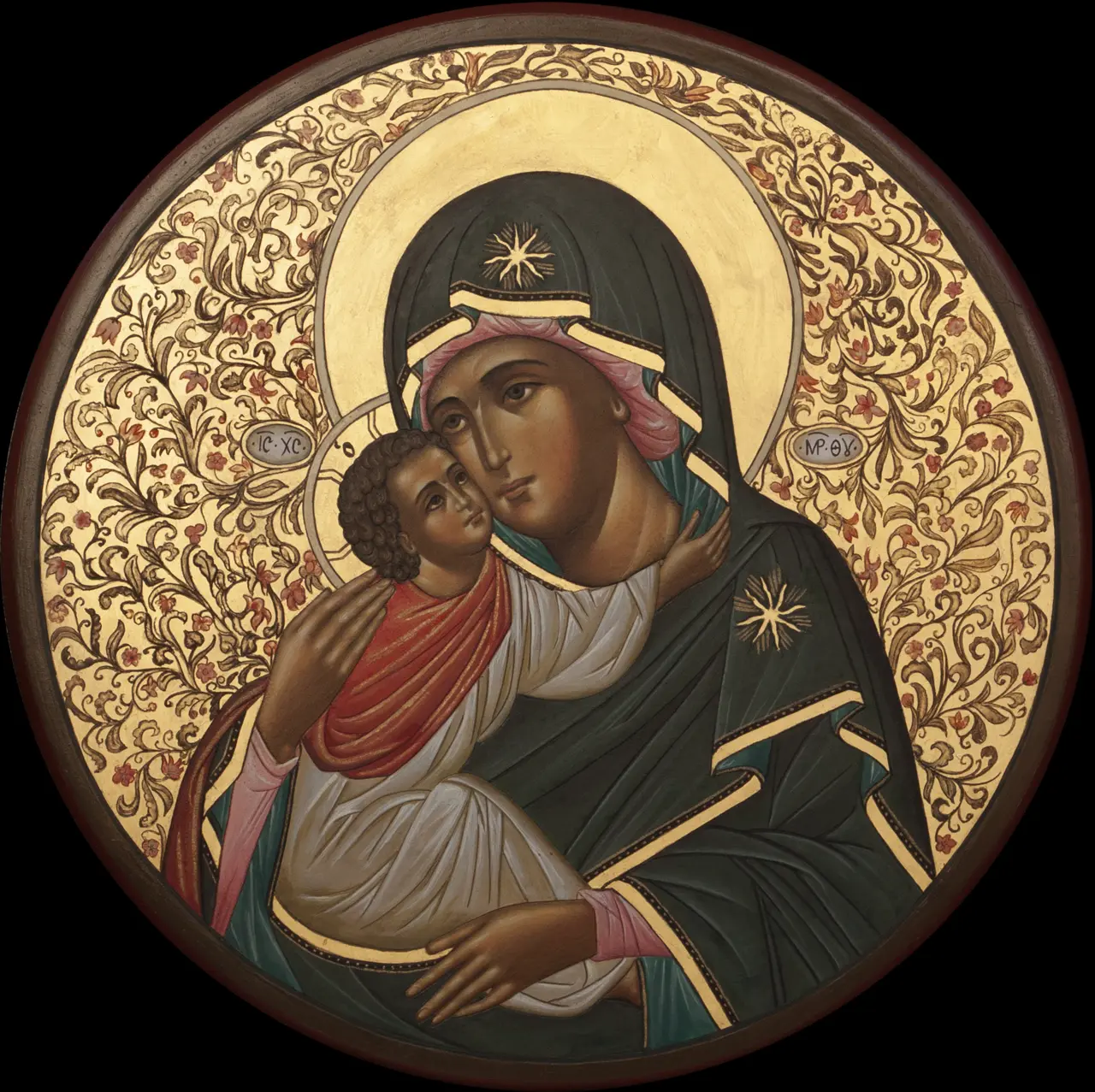
Panagia Glykophilousa
The Virgin of Tenderness on a roundel, decorated gold ground.
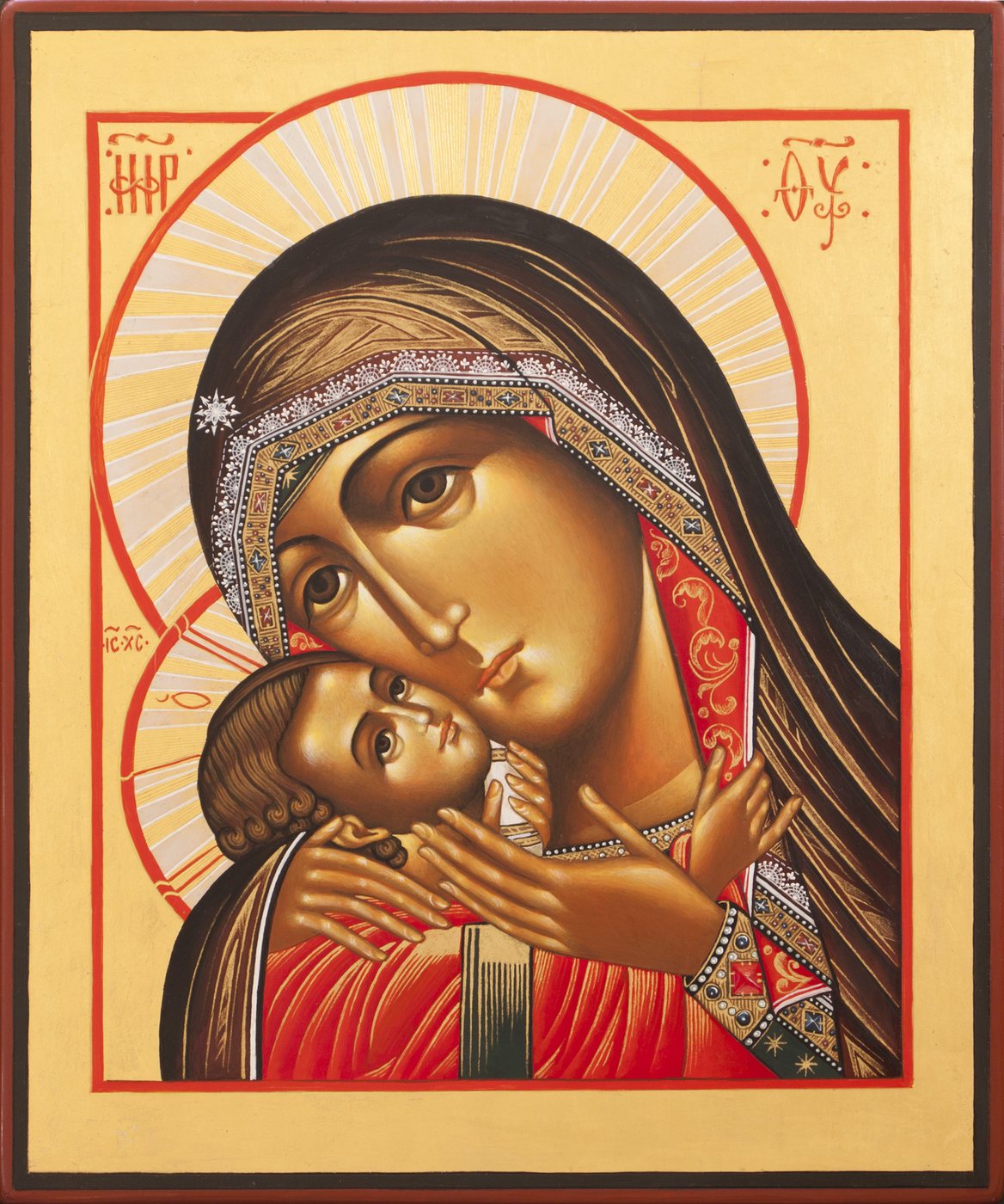
Mother of God Eleousa
The Greek monograms MP ΘY and IC XC, radiant halos.
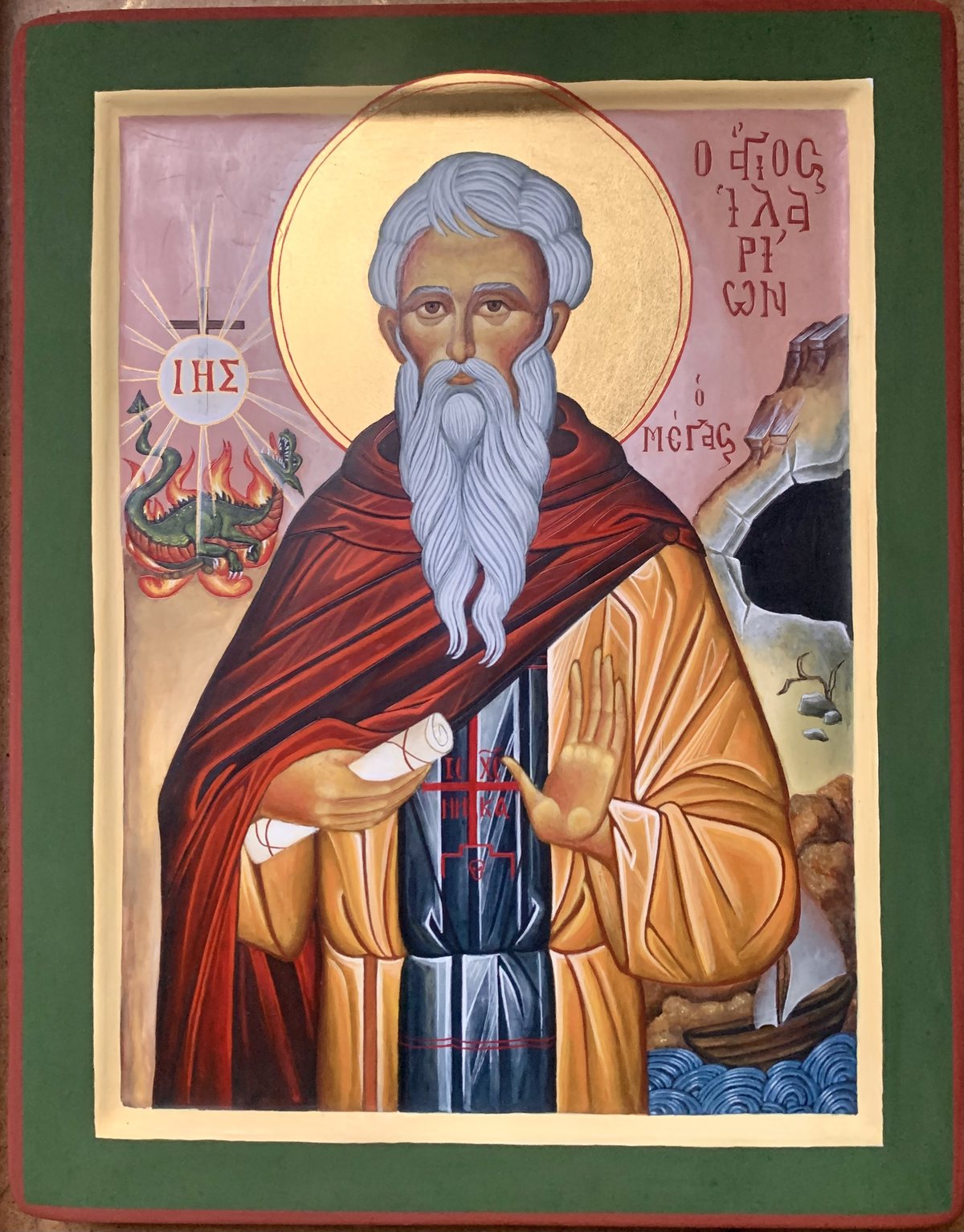
Saint Hilarion the Great
Greek inscription; the radiant Name of Jesus defeats the dragon.
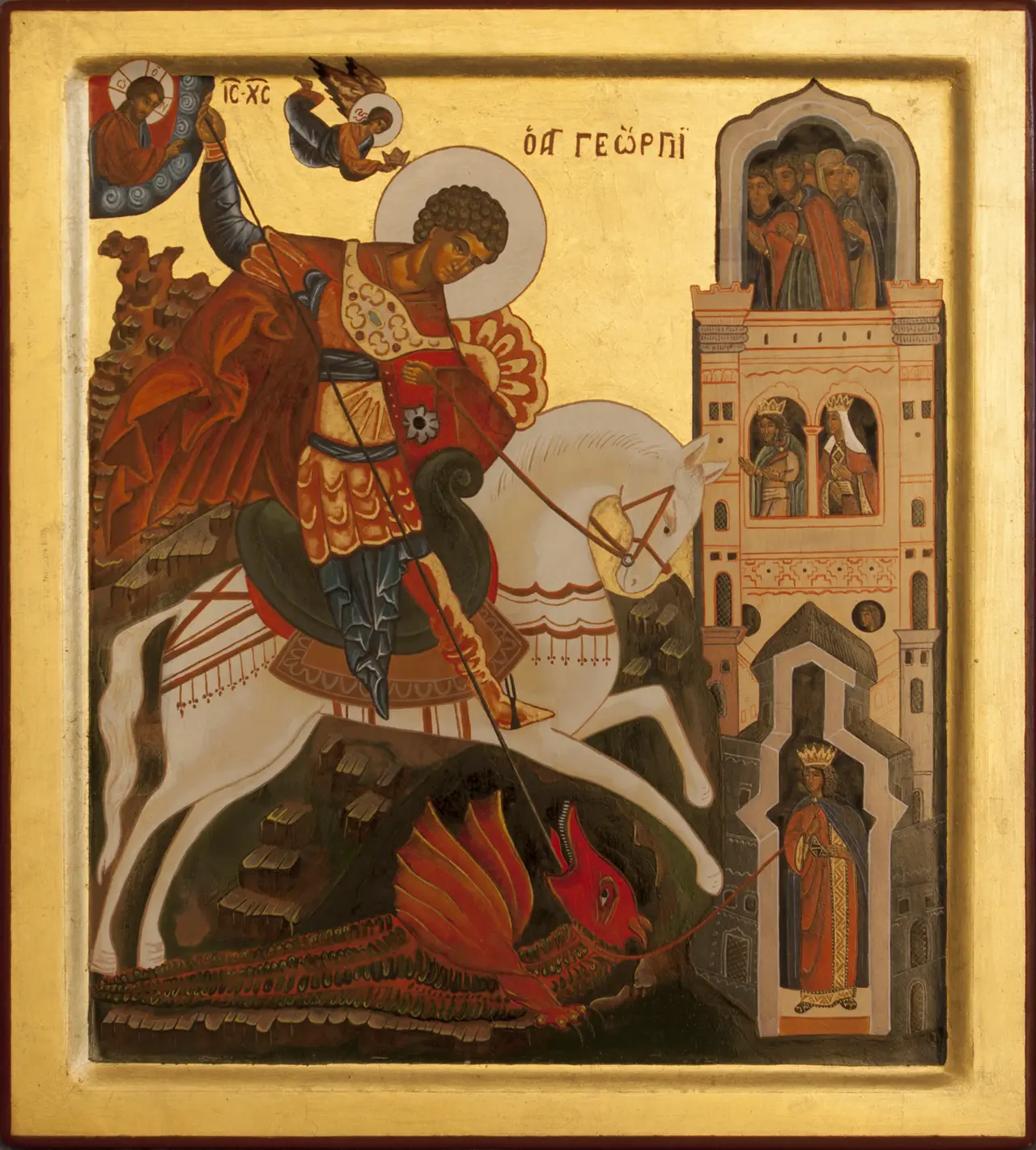
Saint George
The great martyr on horseback defeating the dragon.
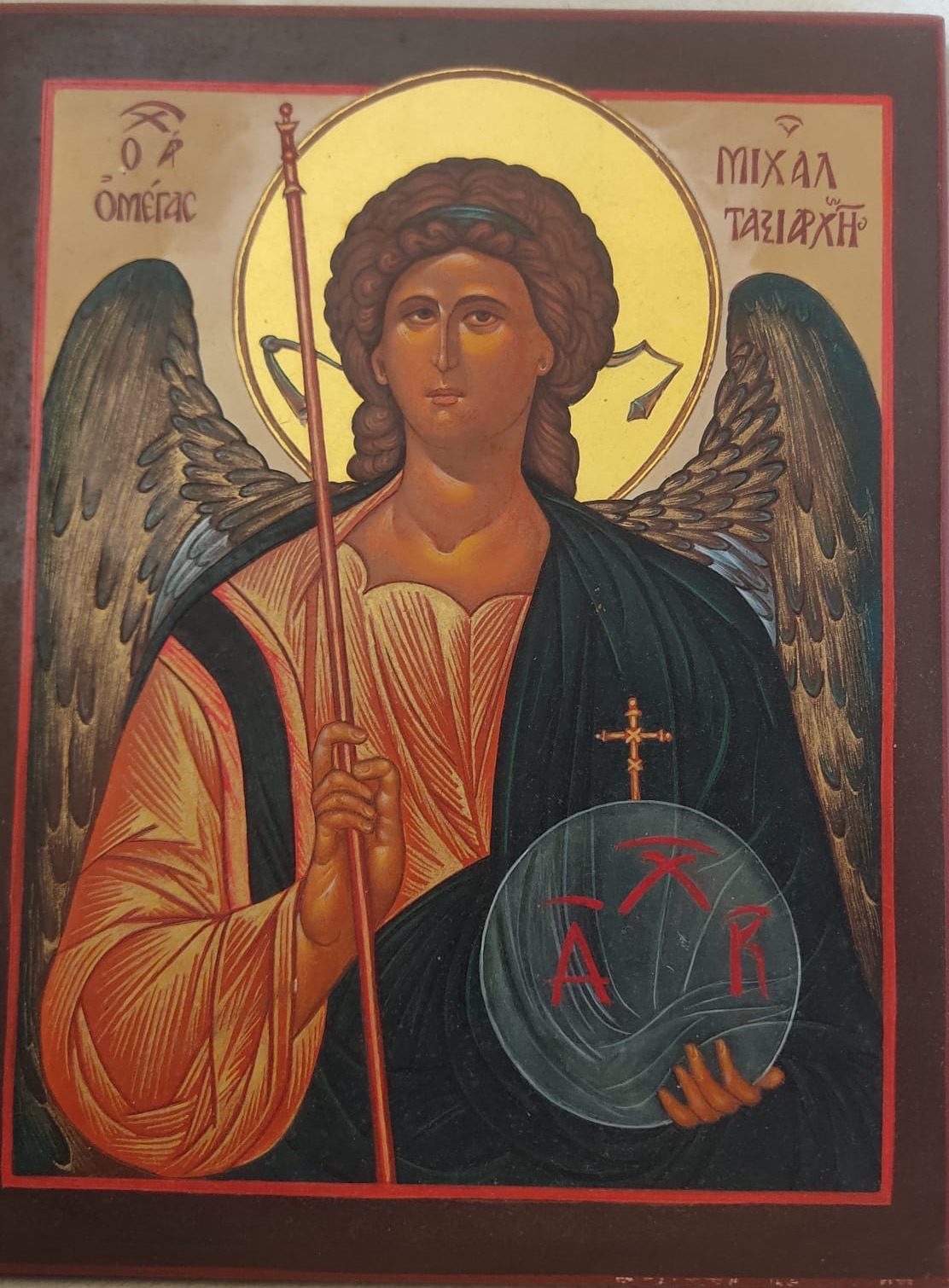
Saint Michael the Archangel
The Taxiarch, leader of the heavenly hosts.
Frequently asked questions
Do the icons have Greek inscriptions?
Yes, if you wish: Concetta Basile writes inscriptions in Greek or Latin. For icons of the Greek tradition the monograms IC XC and MP ΘY are used, and the saint's name is preceded by Ο ΑΓΙΟΣ (or Η ΑΓΙΑ for a female saint).
What is the difference between a Greek and a Russian icon?
They are two branches of the same Byzantine tradition. The page on schools and styles explains the differences in colour, proportion and drawing; when commissioning you can ask for the icon to follow a specific model.
Which icon should I give for a Greek name day?
The icon of the saint whose name the person bears, with the name written in Greek. If the name comes from a feast, such as Evangelia (Annunciation) or Anastasia (Resurrection), the icon of the feast can be painted.
Can icons be sent to Greece and Cyprus?
Yes. Concetta Basile paints in Sicily and sends icons throughout Italy and abroad; shipping arrangements are agreed at the time of commission.