The face of God made man
Hand-painted icons of Jesus Christ: the types of the Saviour
The icon exists because God became man: He whom no one had seen took on a face, and that face can be painted. This is why the image of Christ is the foundation of all iconography. Tradition has preserved many types, each tied to one aspect of his mystery: the Lord of the universe, the eternal Child, the Shepherd, the Crucified.
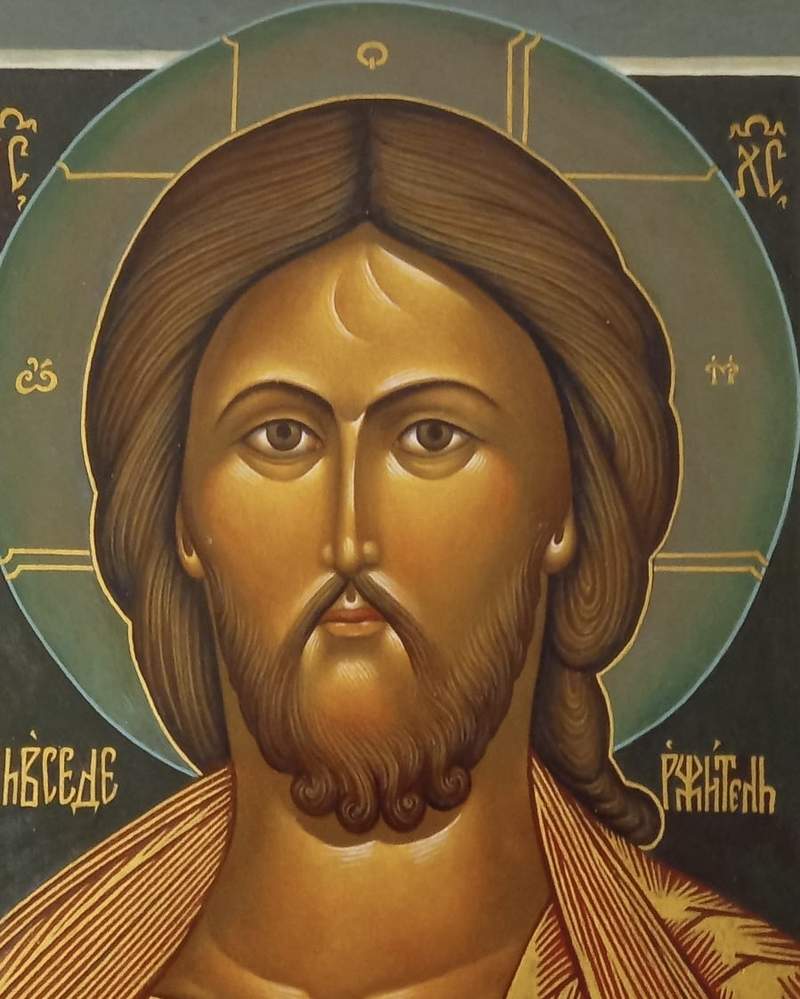
How Christ is recognised in the icon
In every icon of Christ the halo bears a cross, the cruciform nimbus, and in the arms of the cross appear the Greek letters Ο ΩΝ, «He who is», the name by which God reveals himself to Moses. Beside the face, the inscriptions IC XC abbreviate his name, Jesus Christ. The garments are usually a red or purple tunic, divinity, and a blue mantle, the humanity he assumed; the right hand blesses with fingers that form, in the Greek tradition, the letters of the name IC XC.
The iconographic types of Christ
Pantocrator
«He who sustains all»: Christ half-length, blessing, with the Gospel. The oldest known model is at Sinai (sixth century); in Sicily it dominates the apses of Cefalù and Monreale.
Holy Face (Mandylion)
The face of Christ «not made by human hands» (Acheiropoietos), imprinted according to tradition on a cloth sent to King Abgar of Edessa. It is considered the first icon.
Saviour of the Fiery Eye
A Russian type with an intense, stern gaze, the righteous Judge. The best-known example, from the mid-fourteenth century, is in the Dormition Cathedral of the Moscow Kremlin.
Christ Emmanuel
Christ as a youth, the «God with us» foretold by Isaiah: the eternity of the Word in a child's face. He also appears in the medallion of the Virgin of the Sign.
Good Shepherd
One of the oldest images of Christ, already in the catacombs: the Shepherd carrying the lost sheep on his shoulders.
Christ of Extreme Humility
The Akra Tapeinosis, the Man of Sorrows: the dead Christ upright in the tomb, head inclined and hands crossed. It arose in Byzantium between the eleventh and twelfth centuries, linked to the liturgy of Holy Week.
Christ enthroned
The King of kings and Great High Priest, seated in majesty: he is the centre of the Deesis, between the Mother of God and Saint John the Baptist who intercede.
Christ the True Vine
«I am the vine, you are the branches» (Jn 15:5): Christ from whose breast branches spread out bearing the apostles. An icon of communion, for a family or a community.
Works by Concetta Basile
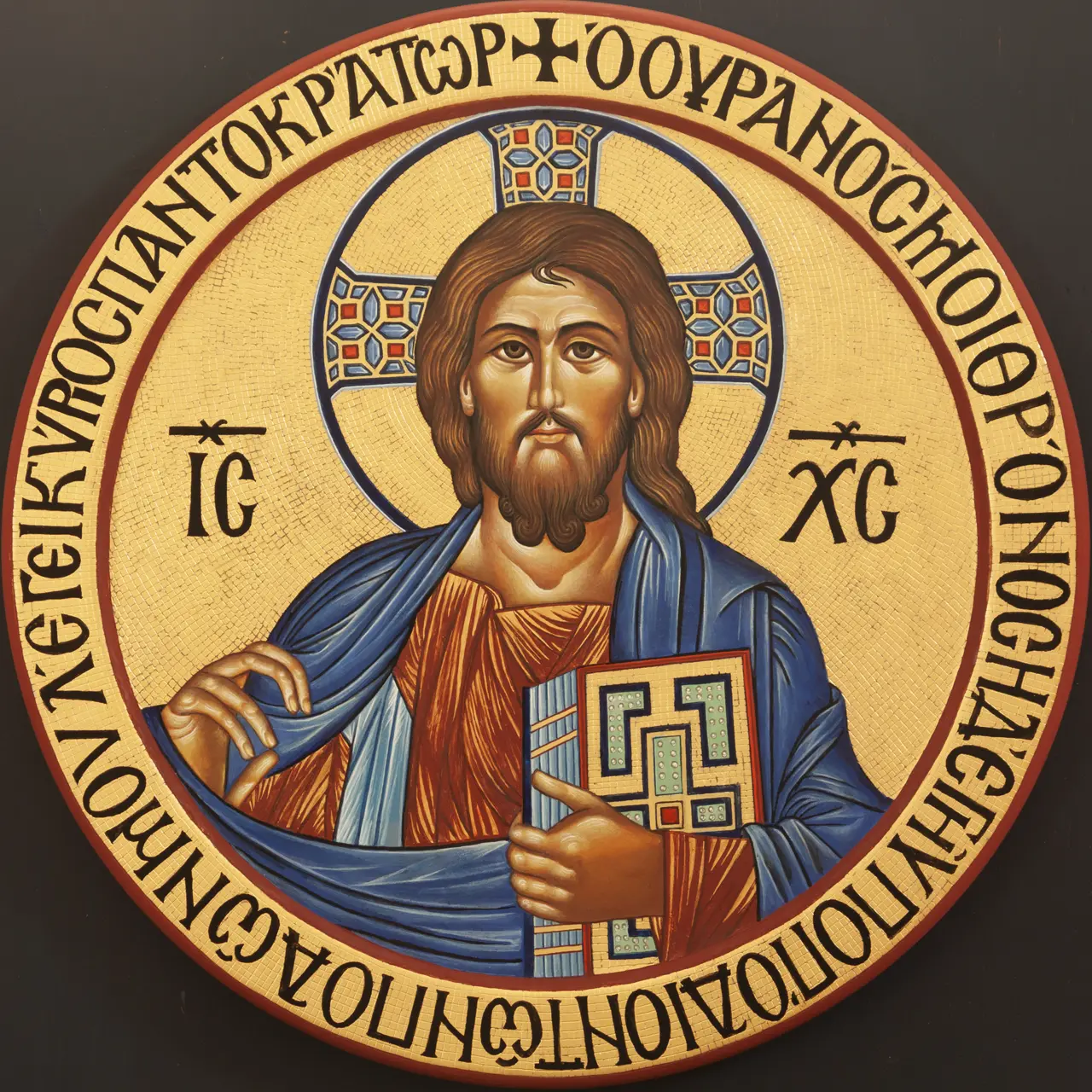
Christ Pantocrator
Cruciform nimbus, Gospel, Greek inscriptions.
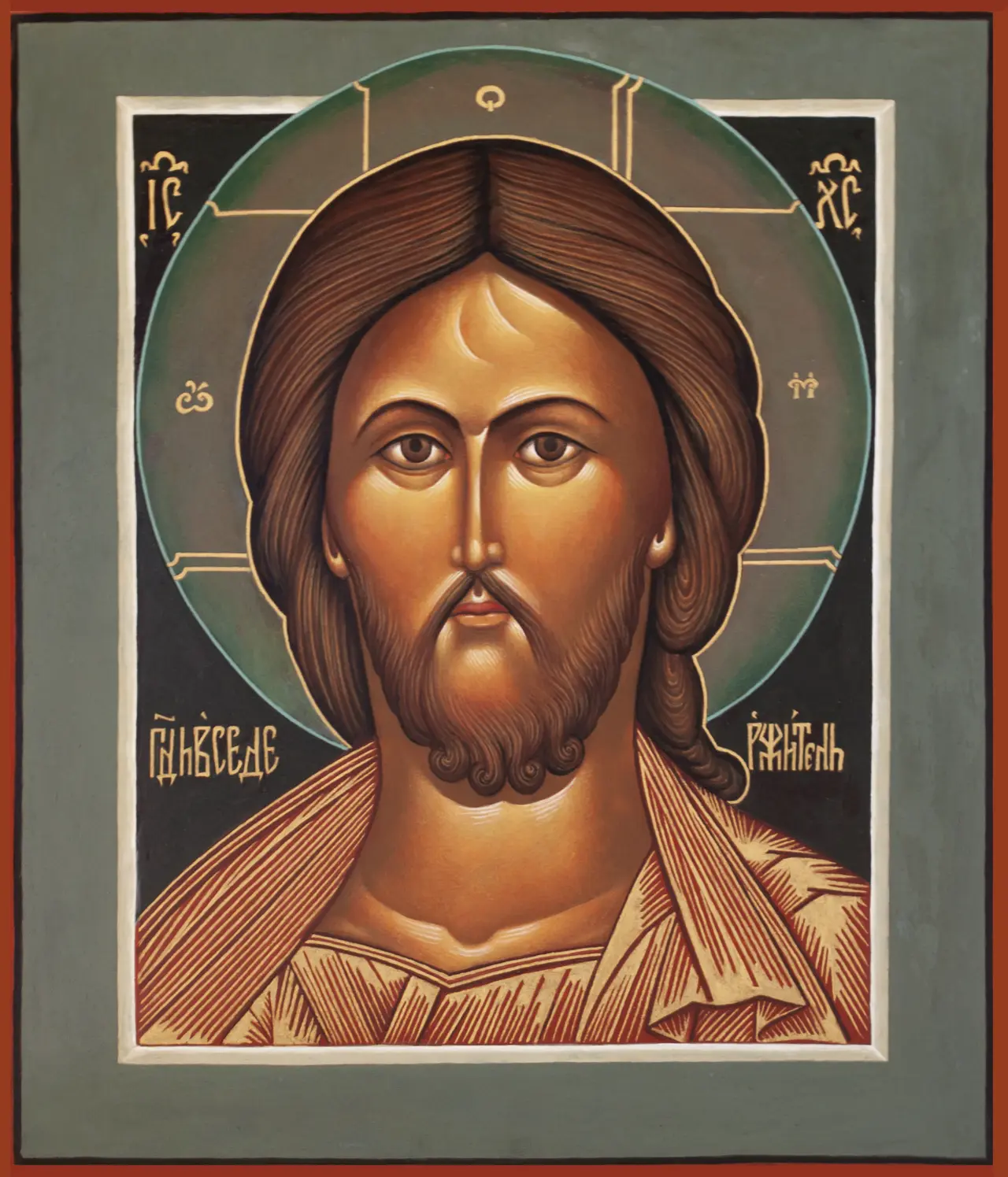
Saviour of the Fiery Eye
Russian type with an intense gaze.
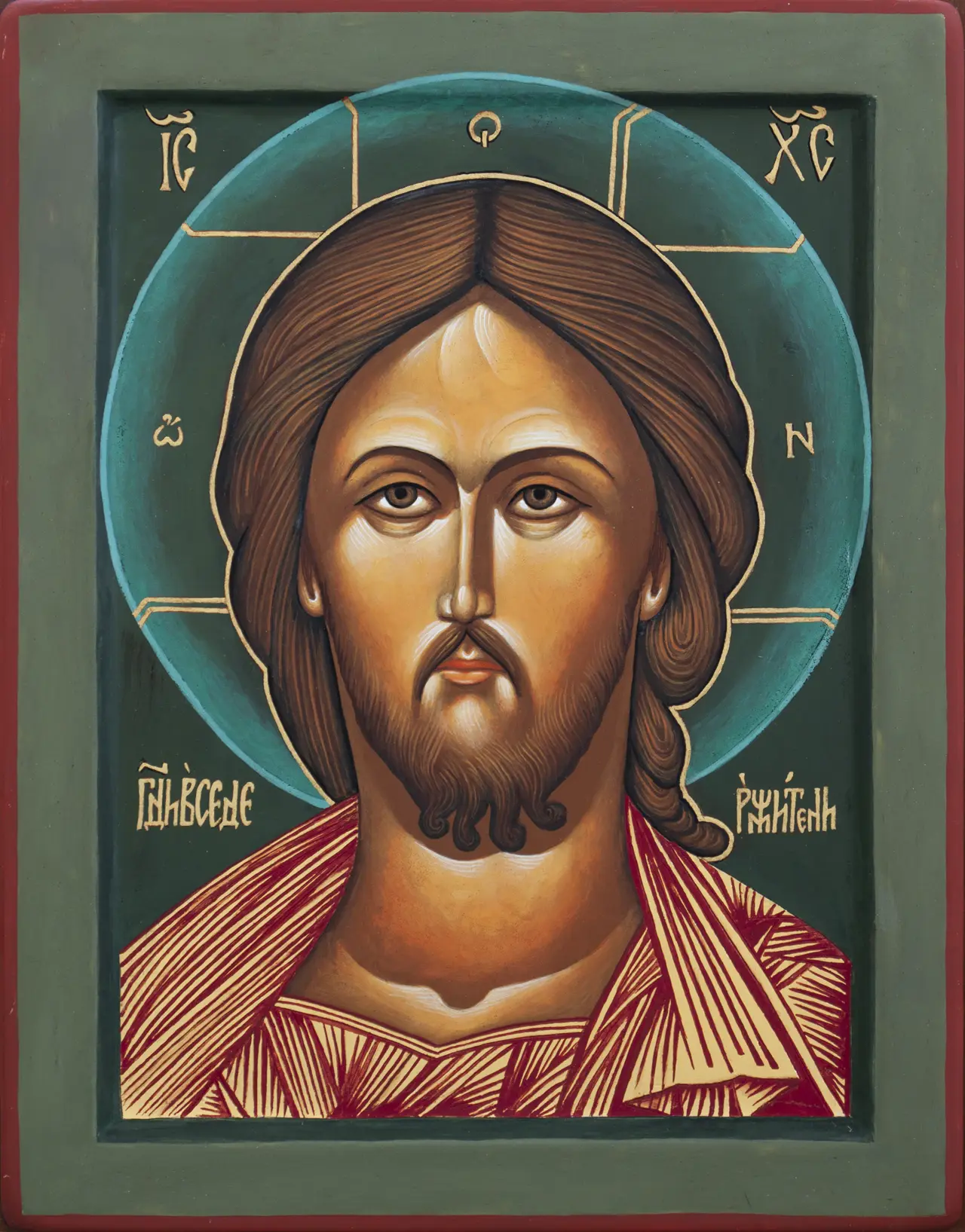
Holy Face
The face not made by hands on a gold ground.
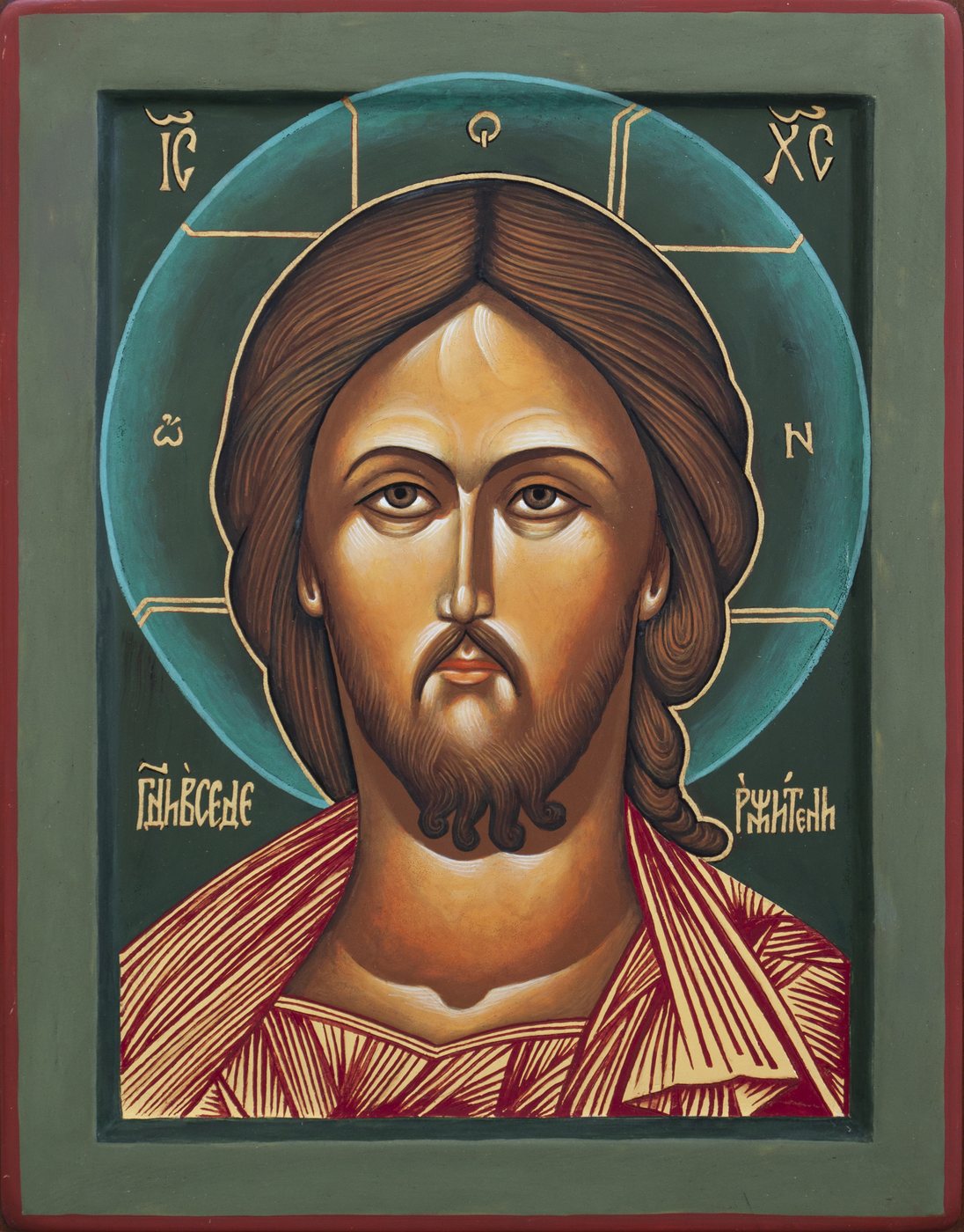
Saviour of the Fiery Eye, turquoise halo
Cruciform nimbus with Ο ΩΝ on a dark green ground.
How to choose an icon of Christ
- For the prayer corner at home, beside the Mother of God: the Pantocrator, on the viewer's right.
- For a church, a chapel or a study: the Pantocrator or Christ enthroned.
- For a consecrated person, a priest, an ordination: Christ the Great High Priest or the Holy Face.
- For a baptism or a child: Christ Emmanuel or the Good Shepherd.
- For Lent, Holy Week or for someone who suffers: Christ of Extreme Humility.
- For a family, a community, a united company: Christ the True Vine.
A face written in prayer
The face of Christ is the most delicate part of any icon: it is built glaze after glaze, from the dark tone to the light, until the gaze becomes presence. Concetta Basile paints it in egg tempera on a gessoed panel, with natural ochres, earths and oxides. Like every icon by Concetta Basile, it is fully gilded with 23¾ karat gold, with inscriptions in Greek or Latin, and is commissioned with an offering proportionate to the time and materials of the work.
Frequently asked questions
Which icon of Christ is best for the home?
Traditionally, the prayer corner follows the order of the iconostasis: Christ on the viewer's right, the Mother of God on the left. But every type of Christ can accompany a home: the choice is made together during the conversation, according to the person and the occasion.
What do the letters Ο ΩΝ in Christ's halo mean?
They mean «He who is», the name of God revealed to Moses at the burning bush (Ex 3:14). Written in Christ's nimbus, they say that this human face is the face of God.
Are the Holy Face and the Mandylion the same icon?
Yes: the Mandylion is the cloth on which, according to tradition, the face of Christ remained imprinted; in the icon the face appears on the cloth, often held by angels or on a gold ground. In Italy it is also known as the Holy Face or Volto Acheropita.