Made for one person
Personalised hand-painted icons: an icon conceived for one person
A hand-painted icon is always unique, but it can also be personal: conceived for a person, a family, a story. This does not mean inventing: the icon remains faithful to the canon. Personalisation lies in the choice of saint, size, format, inscription and those details that tradition leaves to the iconographer and to the one who commissions.
What can be personalised in an icon
The name saint
The saint whose name one bears, with the name written in Greek or Latin beside the figure.
Family patrons
Several saints in the same icon, one for each member of the family, gathered around Christ or the Mother of God.
The size
From small formats for a bedside table to large panels for a chapel, up to the measure icon, as tall as the newborn.
The format
Rectangular, square, round or oval panel; a triptych that opens and closes, like the Deesis.
The inscription
Monograms and name in Greek or Latin, written by hand with the brush as part of the icon.
The purpose
A baptism, a wedding, an ordination, a new home, a thanksgiving, a memorial: the choice of subject arises from the occasion.
The family icon
In the Eastern tradition there is an ancient custom of an icon gathering the patron saints of all the members of a family: the parents, the children, sometimes the grandparents. Each saint is recognisable by his or her attributes and by the name written alongside; at the centre, or above, Christ, the Mother of God or the Holy Trinity.
It is an icon that grows with the family: it is planned together, the saint for each person is chosen, and it becomes the heart of the home's icon corner. When a child is born, his or her name icon can be commissioned to stand beside it.
Personal, but always faithful to the canon
A personalised icon is not a portrait: the saint does not have the face of the recipient, and the image does not adapt to passing tastes. Tradition fixes each saint's features, the colours of the garments, the gestures; Concetta Basile respects them, because it is precisely this faithfulness that makes the icon recognisable and worthy of prayer.
Within the canon, however, there is room for real choices: the tone of the ground, the decoration of the gold, a half-length or full-length figure, a scroll with a verse. These are discussed in the conversation before work begins. Like every icon by Concetta Basile, it is fully gilded with 23¾ karat gold, with inscriptions in Greek or Latin, and is commissioned with an offering proportionate to the time and materials of the work.
Some icons conceived for a person or a family
Among Concetta Basile's works, some born for a specific person or community.
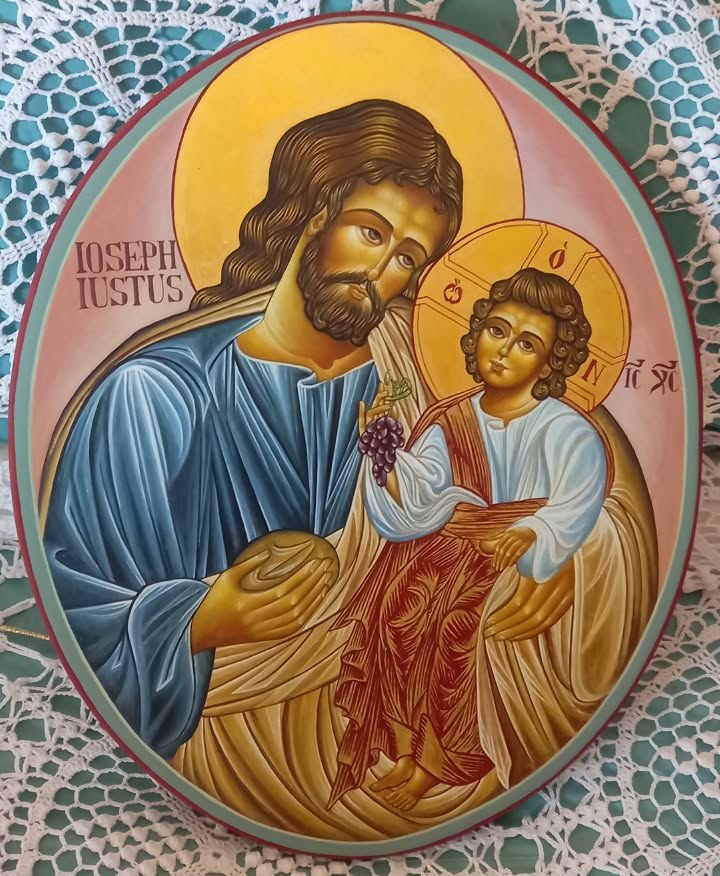
Saint Joseph the Nourisher
A newly conceived icon, commissioned by Archimandrite Father Alessio Mandanikiotis.
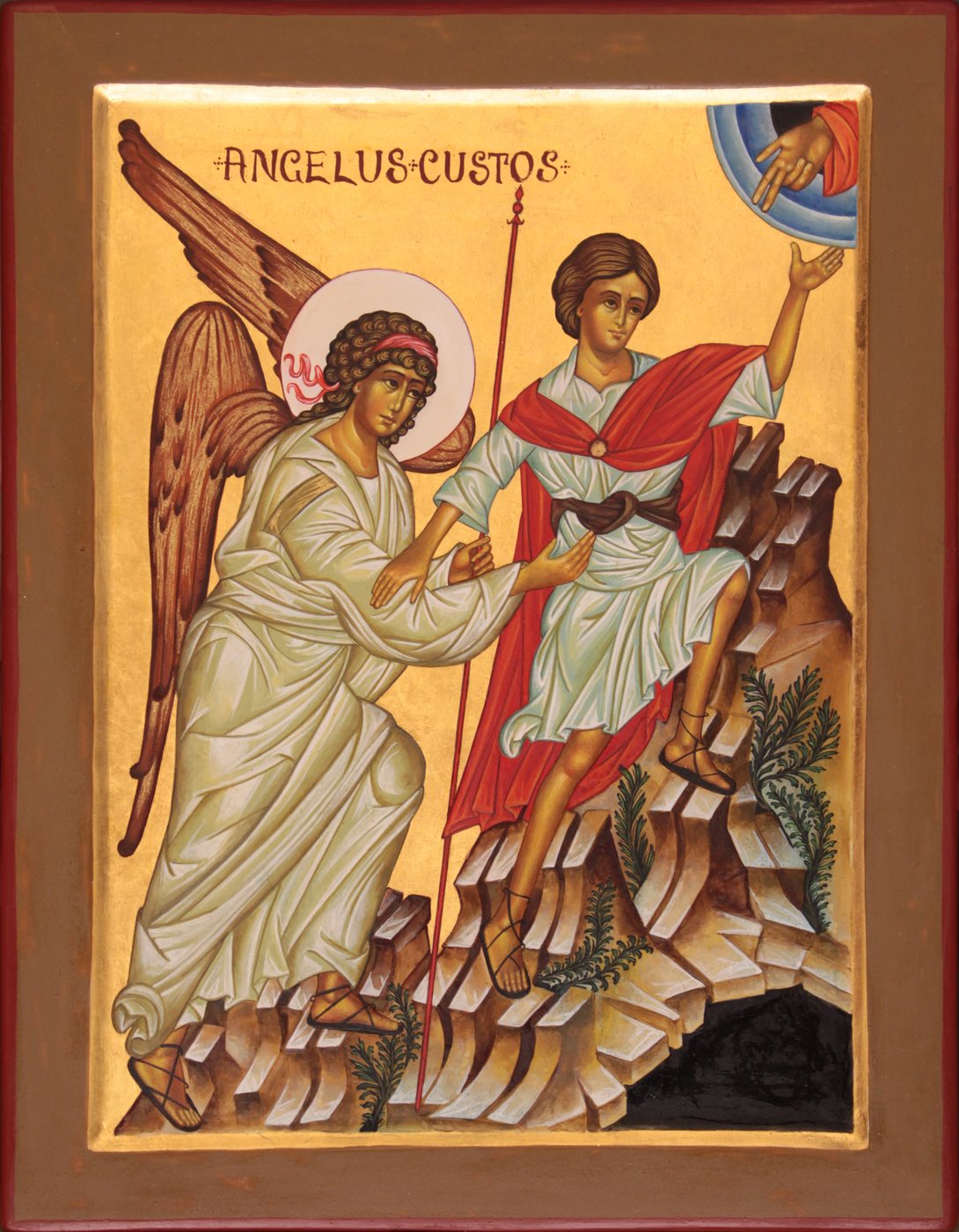
Guardian Angel
The icon for a child: the angel who watches over him or her.
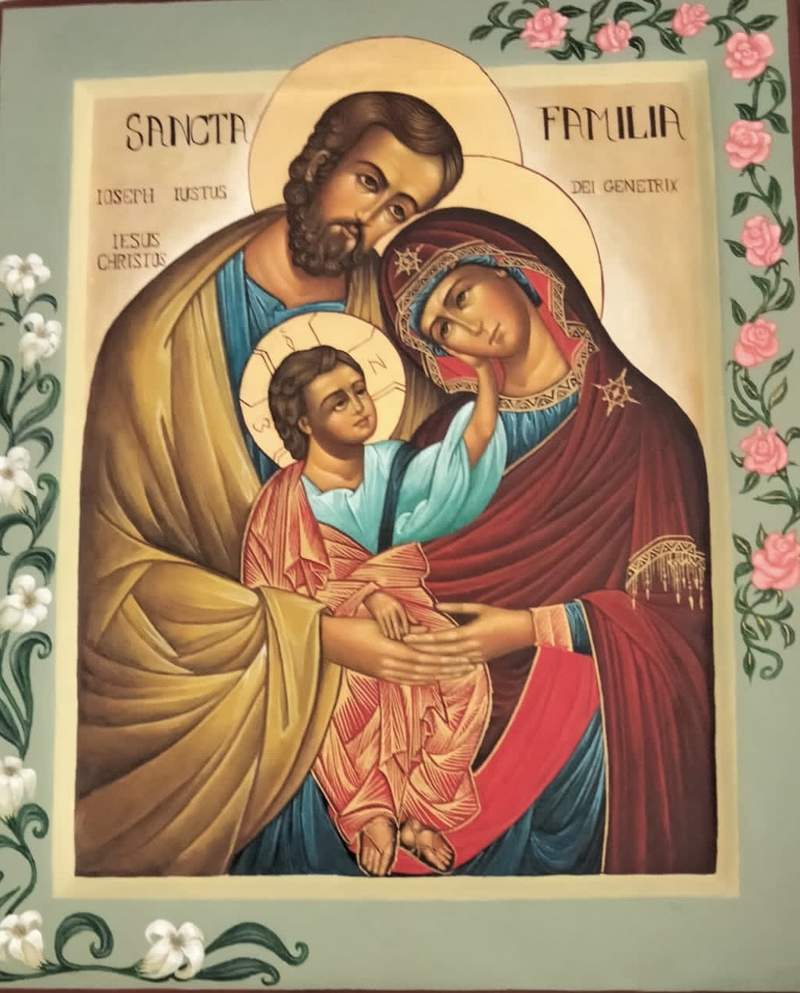
Holy Family
The icon for a family, for a married couple, for the home.
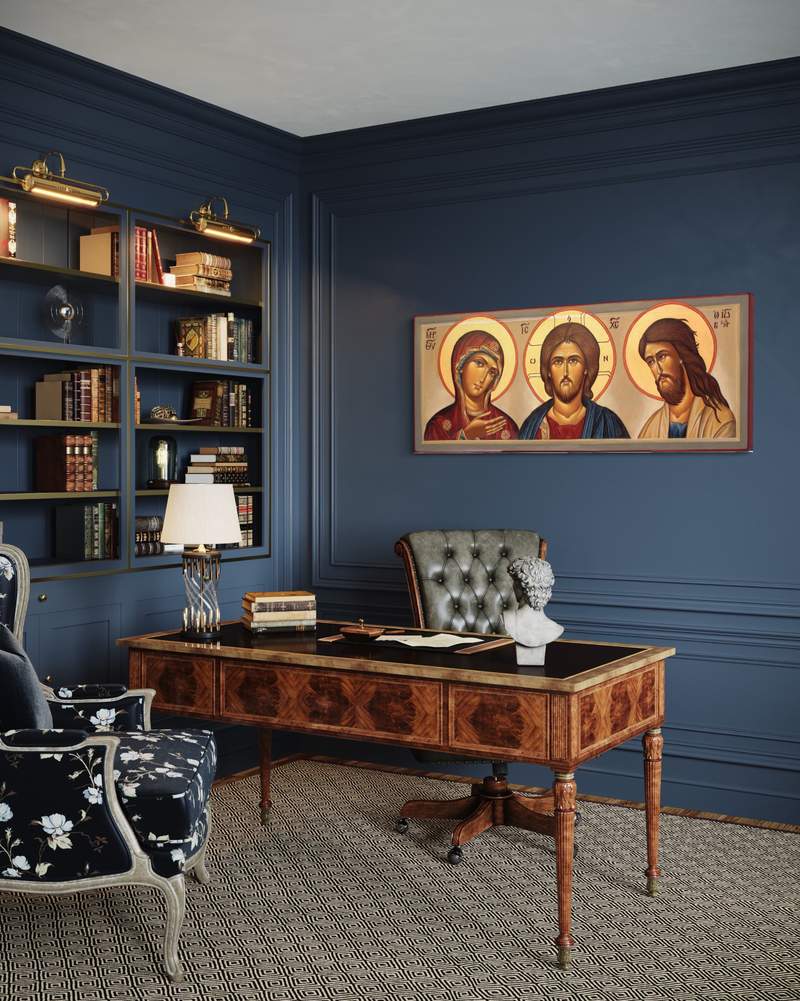
Deesis triptych
The triptych format, which opens and closes.
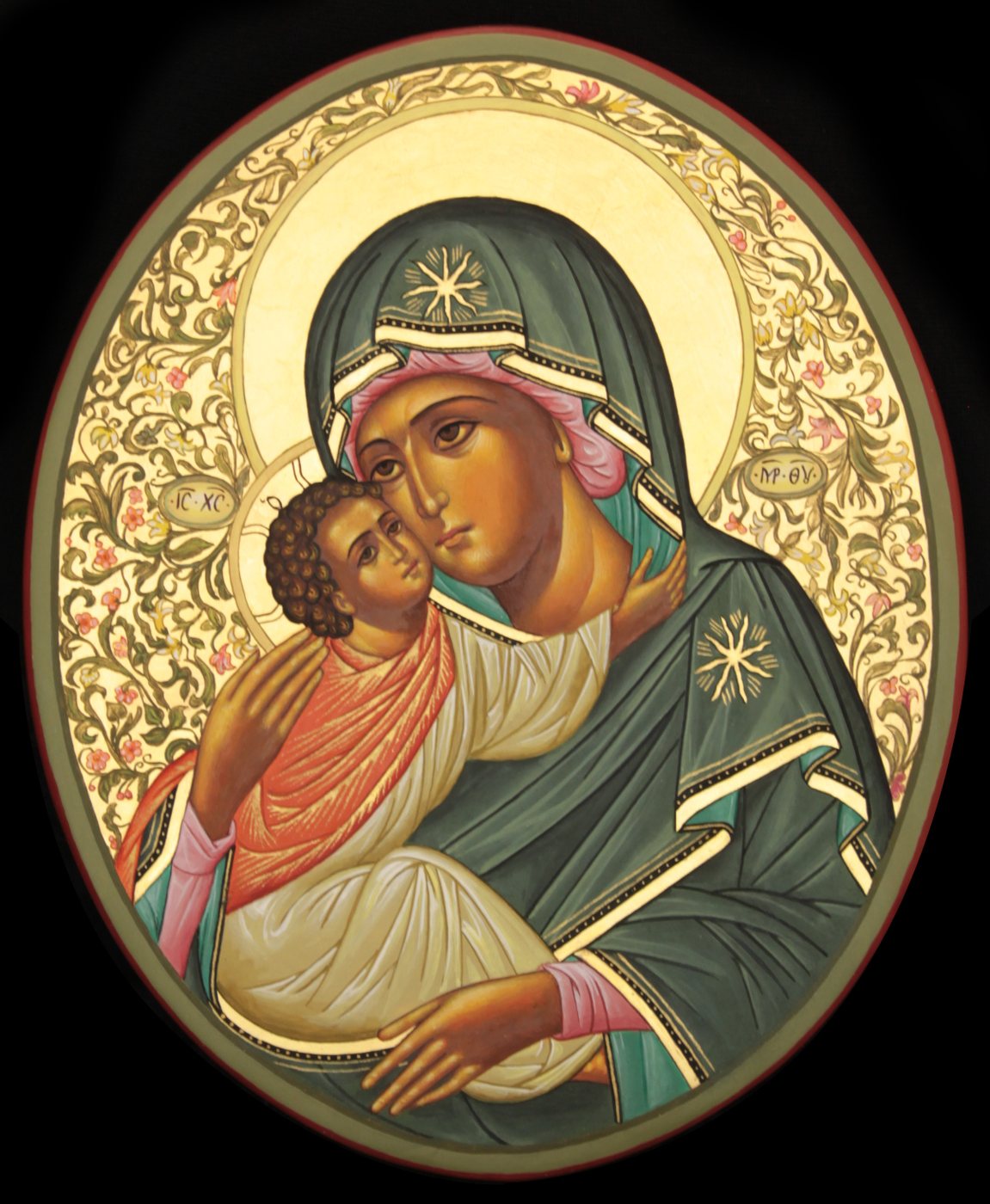
Virgin of Tenderness, oval
The oval format.
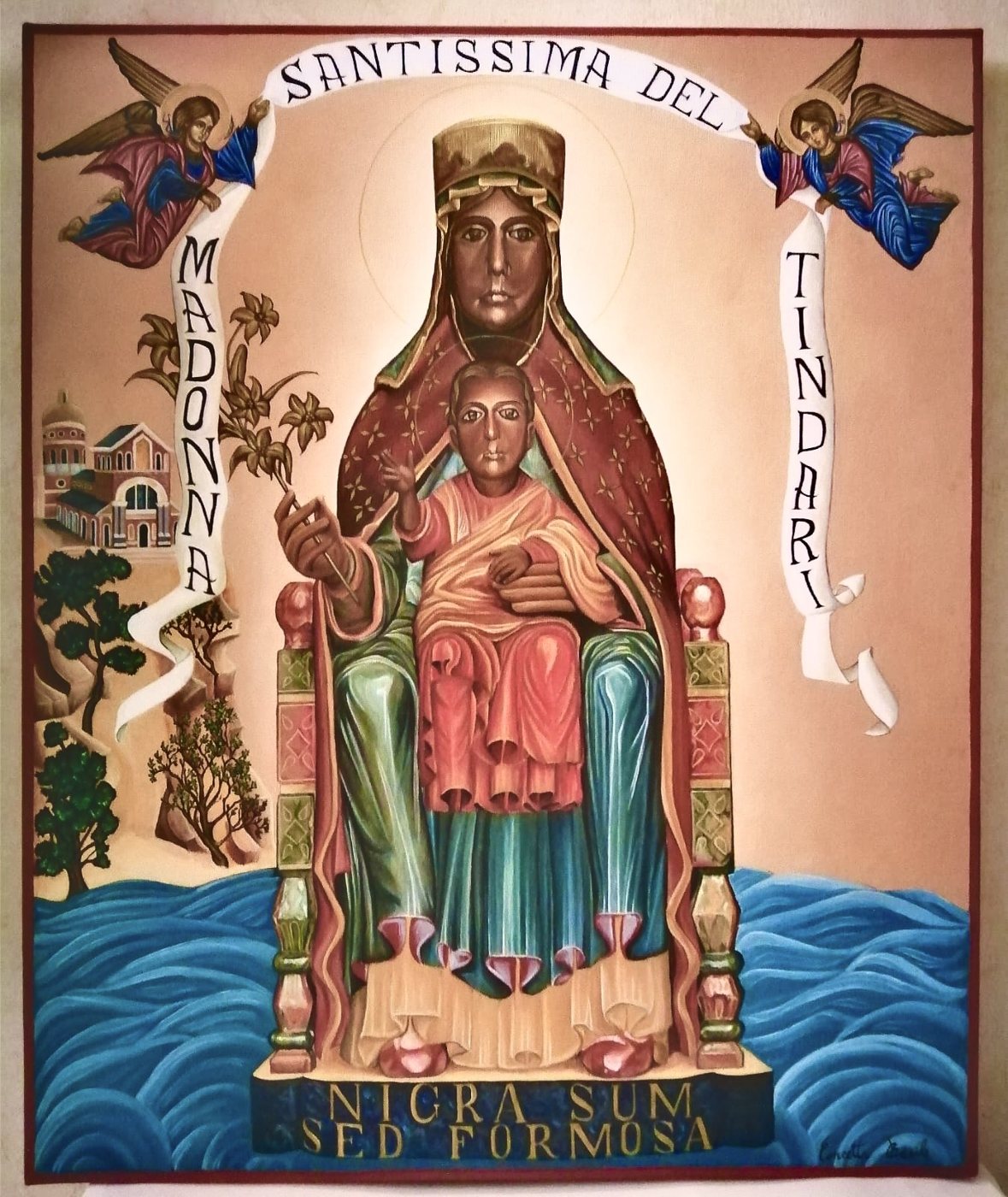
Our Lady of Tindari
The Madonna of a shrine dear to the family, translated into an icon.
Frequently asked questions
Can a little-known saint be painted?
Yes. If the saint has a traditional iconography, it is followed; if not, Concetta Basile studies the sources, the life and the attributes and proposes an image that respects the canon, as she did for the newly conceived icon of Saint Joseph the Nourisher.
Can my face or a relative's face be put in the icon?
No: the icon is not a portrait. The saint is depicted with the features tradition attributes to him or her. Personalisation lies in the choice of saint, name, size and format.
Which formats are possible?
Rectangular, square, round or oval panels, triptychs, and fully custom sizes, from small formats to large panels for a chapel.
In which language is the name written?
In Greek or Latin, as you prefer, written by hand with the brush: for example Ο ΑΓΙΟΣ ΝΙΚΟΛΑΟΣ or SANCTUS NICOLAUS.