Sancta Familia
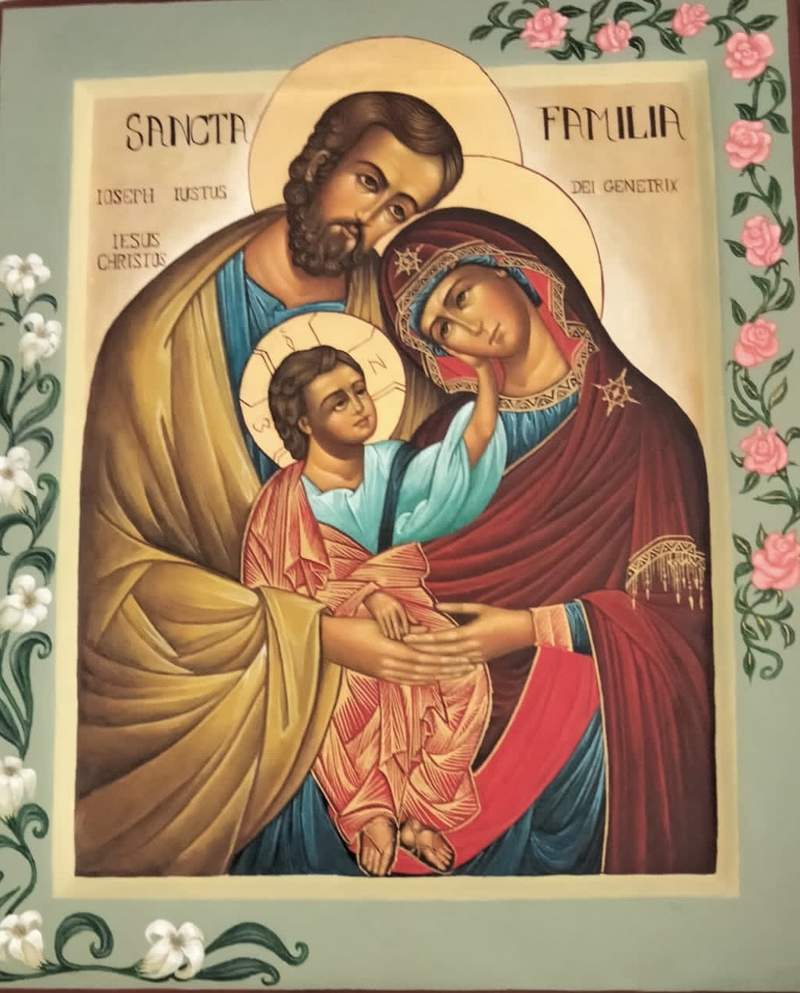
Hand-painted icon of the Holy Family
Mary, Joseph and the Child united in a single embrace: the Holy Family icon is the gift par excellence for new families and for those celebrating a milestone. Concetta Basile paints it in the Byzantine language, with inscriptions in Latin or Greek.
A Western subject in an Eastern language
In the Byzantine tradition Joseph appears mainly in the festal icons: the Nativity, the Flight into Egypt, the Presentation in the Temple. The Holy Family as a standalone image is a subject dear to Catholic devotion, which contemporary iconography has translated into the language of the icon: transfigured faces, inverse perspective, gold as divine light.
It is an example of the spiritual creativity that renews the iconographic language while remaining anchored in the theology of the face: a bridge between Catholic sensibility and Eastern Tradition.
The work of the atelier
In the icon painted by Concetta Basile, Joseph wraps the Mother and Son in his mantle, in a gesture of protection. The border is adorned with flowers, and the Latin inscription SANCTA FAMILIA runs across the top. Flowers, border colours and inscriptions can be personalised, for example with the couple's initials or a date on the back of the panel.
Holy Family
Floral border, Latin inscription.
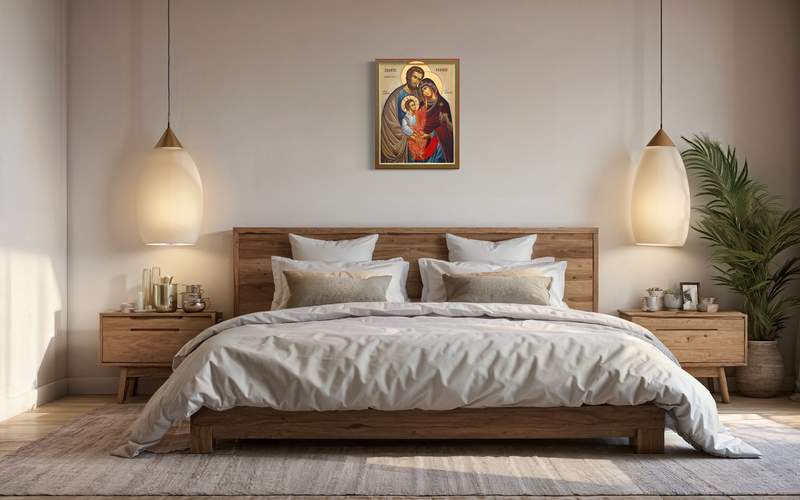
Holy Family in a bedroom
Example of a domestic setting.
When to give it
- Wedding: a gift from the couple or the witnesses, to hang in the new home.
- Birth and baptism of a child.
- Wedding anniversaries (25th, 50th), often as a shared gift from children and grandchildren.
- Blessing of a new home.
Frequently asked questions
Can dates or the couple's names be added?
Yes. Out of respect for the icon, dedications, names and dates are usually written on the back of the panel or in the explanatory booklet that accompanies the work; the front carries only the sacred inscriptions.
Is the Holy Family icon Orthodox or Catholic?
As a standalone image it comes from Catholic devotion, but it is painted with the technique and language of the Byzantine icon. It is appreciated by both traditions.